 EN
EN

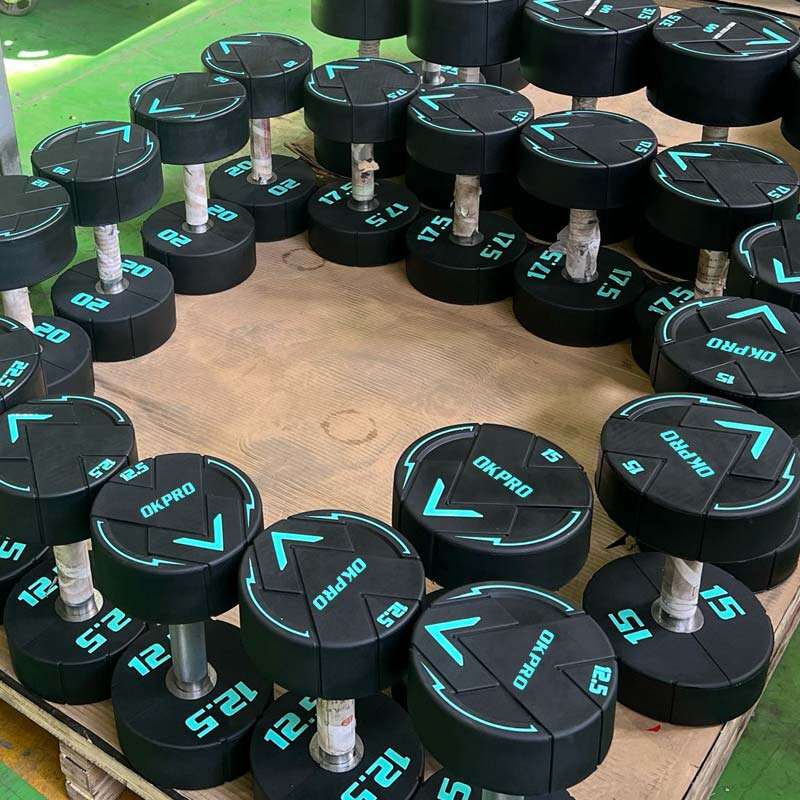
Dumbbells shine in the area of basic movement patterns like squatting, hinging, pressing, rowing, and single leg exercises. Since they're weights, our bodies work freely and can move through as many joints as the exercise requires, just like in real life. For example, goblet squats are awesome for developing lower body strength and keeping the core engaged. For the core to stay engaged, goblet squats are in the winning group. Split squats help in eliminating frustrating strength imbalances in the left and right. Dumbbells are favorites for gyms because they can be placed anywhere and users can control the intensity at which they work without losing the quality of movement. Also, there's something to be said for separate weights and the awareness of body position that they create as opposed to the machines that do the work for us.
Increased range of motion and friendly kinematics for the joints compared to machines and Barbells.
Compared to Barbells, Dumbells give around 15 to 30 percent more range of motion. This is because they allow people to move in all directions, and actual research backs this up in the Journal of Strength and Conditioning Research. When people lift Dumbells instead of Bars, they create less strain on shoulder joints when doing overhead presses and not so much pressure on the lower back during those hip hinge movements. An additional advantage is how joystick machines and selectorized machines only let one side move. This helps people gain back their proper range of motion, and improves their bad movement habits. It has been shown by the NSCA that Dumbell injury rates in a program setting are 21% lower than those of Barbell injury rates. Machines only target specific muscles, and neglet all the tissue and muscles that Dumbells target. This helps reinforce proper movement for people of all ages and fitness levels.
Adaptability Across User Demographics and Training Objectives
Scalable intensity for training phases with adjustable dumbbells for beginners, elite athletes, and post-rehab clients
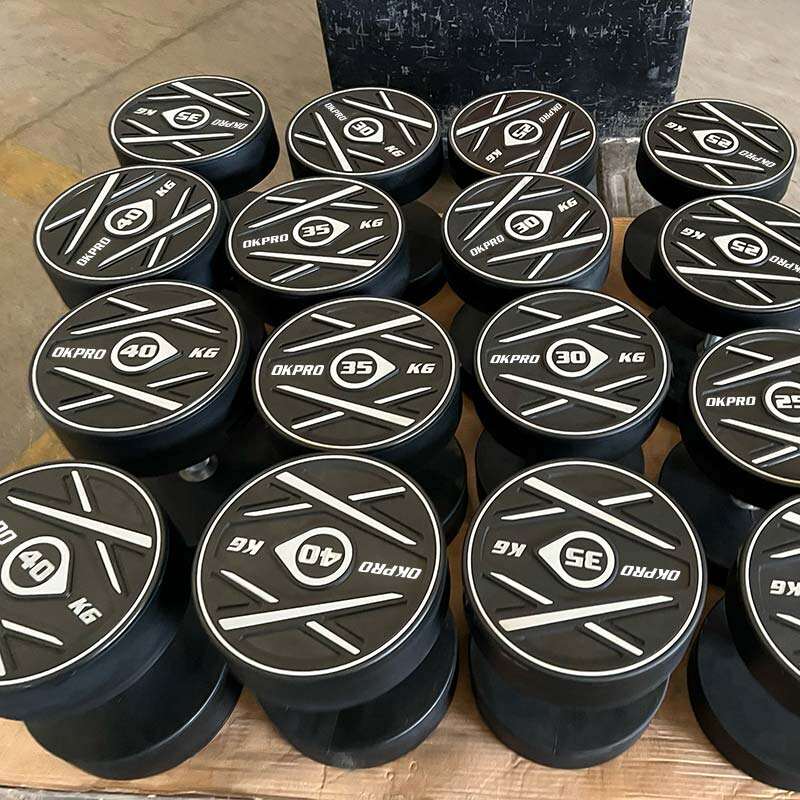
Dumbbells are great for all fitness levels, and getting just the right amount of weight on those lifts, is what makes them shine. New users appreciate the ability to step up in weight in small increments, sometimes just 1 kilogram, to help build strength without risking injury or irritating their joints. High-level athletes prefer sturdy adjustable sets that support over 50 kg (110 lbs) at each hand for some serious power training all while retaining the ability to move freely during exercises. Post-injury recovery has been shown to be faster using dumbbells (28% faster after an injury) compared to using fixed gym equipment due to the ability to control the range of motion which can help avoid pain. Commercial facilities appreciate drop weight dumbbell sets for the fast user-changeover times and rapid swapping of users to maximize the gym usage efficiency.
Unilateral training benefits include adjusting imbalances and decreasing chances of injury using dumbbells.
As people begin single arm dumbbell work, some start to notice and realize previous muscle imbalances. While imbalances can be camouflaged by using machines or a barbell, a study done by the International Journal of Sports Physical Therapy, suggested that imbalances become more evident using older training methods. In a twelve week study, participants that trained one side at a time noted a 41% decrease in strength imbalances compared to training both sides simultaneously. This was a result of the stronger side not being able to compensate for the weaker side. In addition to promoting shoulder imbalances, dumbbells also allow for a greater range of natural movement during presses and rows. This is in contrast to machines that often promote unnatural shoulder movement. These shoulder imbalances can be reduced using dumbbells, as explained by the American Council on Exercise. Dumbbells also require greater activation of the core muscles compared to machines. This core activation helps to enhance stability, as compared to stability gained on imbalanced machines. Improved stability from dumbbells can enhance Positively, daily activity and sport performance as well.
Commercial Practicality: Space-Smart, Durable, and Gym-Ready Dumbbell Solutions
Optimized for heavy usage during peak hours, dumbbells with hexagonal, rubber-coated, and selectorized features
Today's dumbbells are excellent for abusive conditions due to the simple fact that gym equipment receives heavy use and abuse. The rubber coating on the hex dumbbells reduces floor damage by 30% and the noise produced by the metal dumbbells by 15 decibels. Selectorized dumbbells save floor space by offering multiple options in one unit. One facility reported a 75% floor space savings after swapping to selectorized dumbbells. These dumbbells are not just tough looking. The test to determine how many drops a dumbbell can withstand is set at 10,000 drops annually. The rubber coating on the dumbbells remains intact, handles do not lose their grip, and the dumbbells withstand thousands of uses. Equipment repair and replacement is a problem faced by many gym owners. Commercial use and abuse is not a problem for our equipment, that why we replace it only every 7 years.
FAQ
What advantages do dumbbells have over machines?
Dumbbells provide a greater range of motion and use a more joint-friendly type of mechanics. Dumbbells allow for more natural movement and less strain. The use of dumbbells also activates more stabilizing muscles and connective tissues. This provides more support and helps to improve the health of the joints over a period of time.
Can dumbbells be used for rehab?
Of course. Dumbbells can be used by all demographics and are especially useful for people post rehabilitation. Research has shown that recovery is actually faster when using dumbbells because they allow for a movement range to be controlled without the presence of any pain.
What makes dumbbells a good choice for commercial gyms?
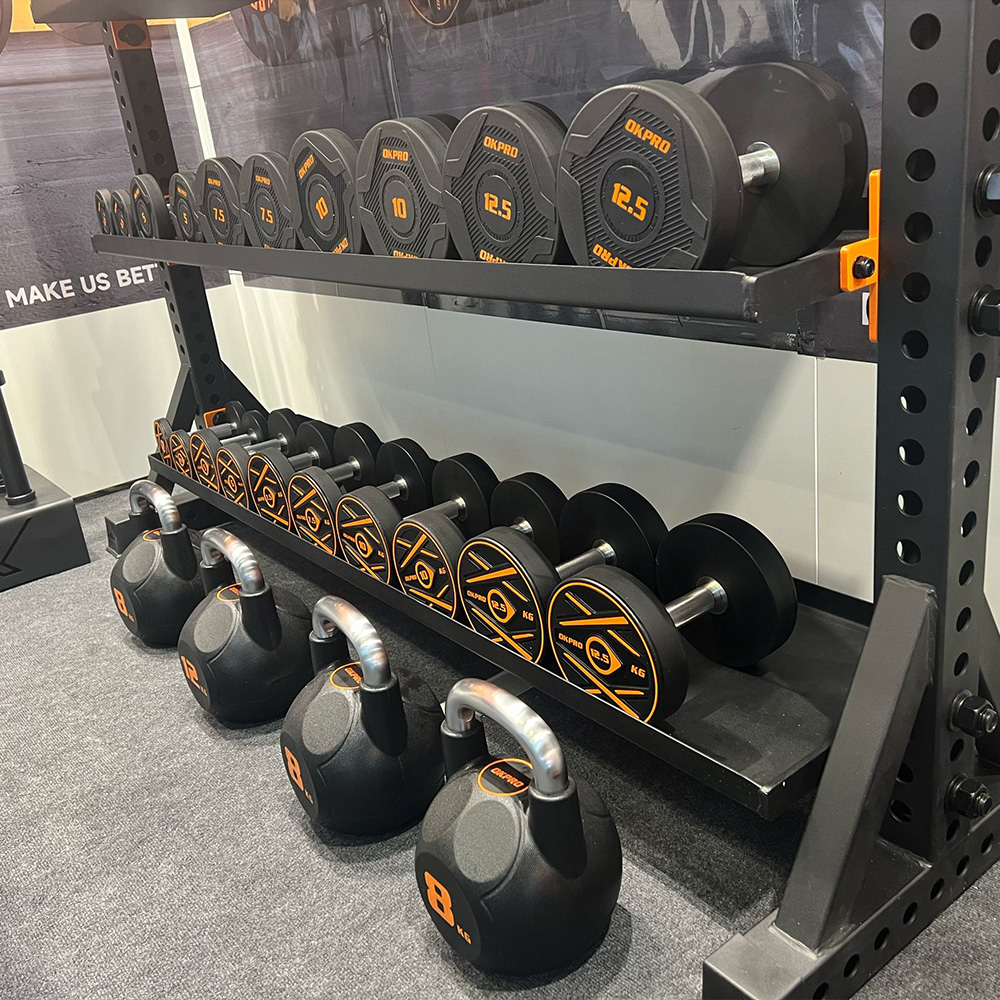
Dumbbells are sturdy, durable, and gym-ready. They are designed in all sorts of shapes, including hex shapes and rubber coated surfaces, making them ready to stand up to heavy use for a long time. They are also highly space-efficient, taking up less overall space and allowing for better utilization of the available space.