 EN
EN

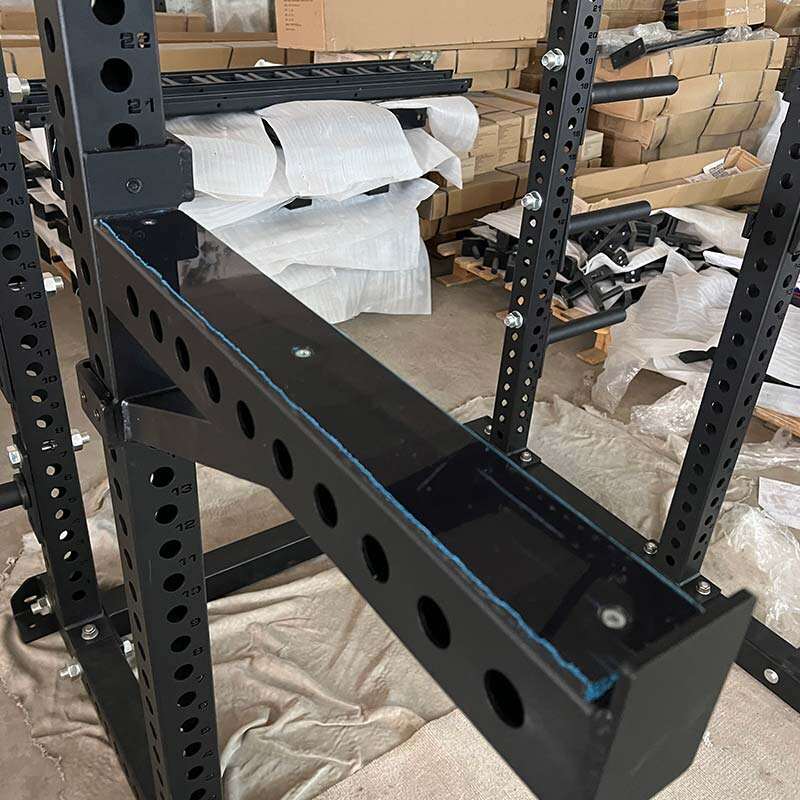
Power Rack Types: Matching Structural Design to Commercial Workflow Needs
Choosing the right power rack type hits the trifecta for assessing gym efficiency, safety, and member satisfaction. Commercial setups call for equipment that can handle high-volume use while maximizing the floor plan.
Full Power Racks, Half Racks, and Squat Stands — Load Capacity, Space Efficiency, and Member Flow
Full power racks (four-post cages) offer the best stability for heavy compoud lifts and typically have a 1,000 pound weight capacity, which makes them great for squats and bench presses. Enclosed full racks are a safety improvement, but can take a lot of room. At a footprint of typically 8’x8’, they are best in a dedicated strength zone. Thankfully, half racks and squat stands provide comparably useful functionality and safety at a load capacity range between 800-1,000 pounds in considerably less room. Half Racks and Squat Stands take up 40% less room. Squat Stands are a great space-efficient option for lifting stations, but unfortunately, do not offer safety features. They need to be strategically located within power rack stations and would be best in a strength zone.
Storage-Integrated and Combo Power Racks — Optimizing Floor Space in High-Density Commercial Gyms
Storage-integrated designs that include plate storage and accessory mounts save up to 20% of floor space in high-traffic zones. Combo racks integrate power rack function with cable pulley systems or pull-up stations, allowing a gym a lot of flexibility within a single rack footprint. These solutions promote safety and member challenge through reinforced steel construction and weight ratings.
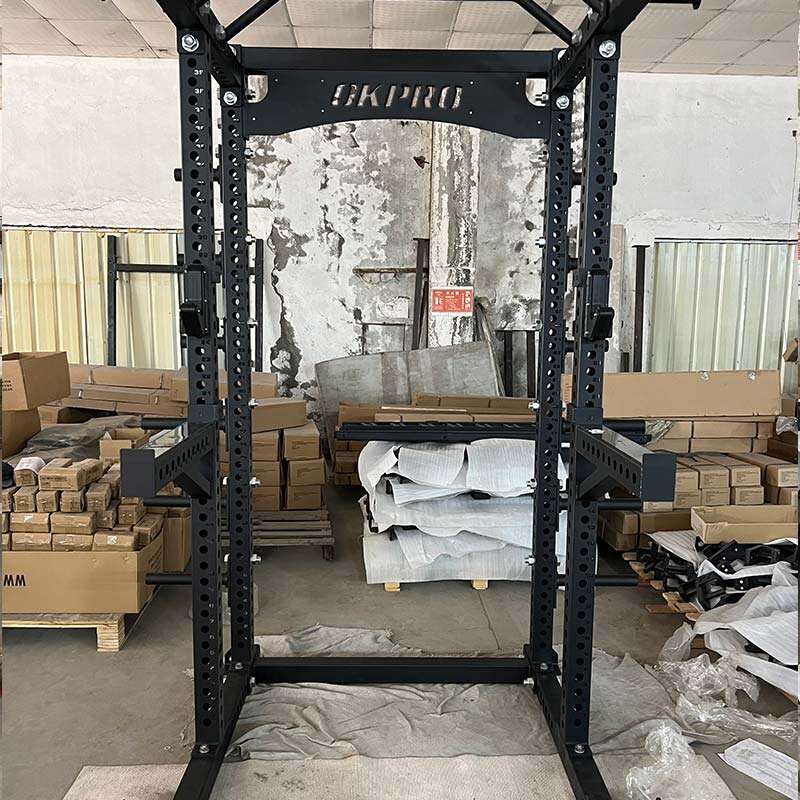
Structural Integrity: Heavy-Duty Power Racks Steel Specifications and Engineering Standards
Power racks must possess maximum structural integrity. Gym owners will only purchase racks made with steel that is 11-gauge (or thicker), welding that adheres to AWS D1.1, and uprights that are reinforced with gussets and/or plate steel. Otherwise, racks can fail under extreme loads. Failures in licensed gym equipment cause up to 740,000 USD in insurance claims every year, and poor materials or bad welding are responsible for approximately 70% of failures (Ponemon Institute, Gym Equipment Failure & Liability Report, 2023). Racks that are designed with thicker steel have less lateral sway, and reinforced racks will have welded frames that are continuous at important joints in the rack.
11-Gauge Steel and Gussets and/ or Rein-forcing Plates, or Precision Welding are Required for Purchase of Commercial Power Racks
Select power racks that are made from 11-gauge (or thicker) steel, which is steel that is >3 mm thick, for the uprights, along with reinforced crossmembers. Flexing steel causes rack failure due to barbell impact, which causes failure to occur faster, and the overall stability of the rack will also be compromised. Precision welding of AWS D1.1 structural code within continuous bead patterns of load bearing joints is also important. Uprights need reinforcements in the form of plates or gussets at the base of the uprights due to lifts that fail cause unbalanced loading. Equipment replacement was reduced by 40% for these specs (Fitness Industry Council, Commercial Equipment Longevity Benchmark Study, 2024).
Base Footprint, Crossmember Rigidity, and Stability Testing Under 1,000+ lbs
A minimum 48"×48" base footprint and triangulated crossmembers prevent rack tipping during heavy lifts. Crossmembers should use bolt-through connections rather than self-tapping screws for consistent torque retention and load transfer. Stability should be verified through ASTM F1744 testing protocols, simulating 1,000+ lb dynamic drops on safety arms. Racks that pass this testing show ≤ 2° deflection during 1RM squats. Facilities must reject units that cannot provide third-party test certificates.
Safety-Centric Design: Features That Prevent Failure in Unsupervised Commercial Use
Commercial gym environments create a unique challenge in designing equipment that protects users during unsupervised sessions. Safety mechanisms must exceed residential standards to account for high-frequency use and varying user expertise.
Adjustable Safety Catches, J-Hooks, and Westside Hole Spacing for Safe, Independent Use of a Power Rack
Adjustable Safety Catches: Steel bars that adjust vertically to catch barbells during failed lifts Commercial racks require catches rated for 1,000+ lbs and are designed for quick adjustments.
J-Hooks: Used to secure barbells during lifts. Commercial grade hooks are deformed resistant and designed for longevity.
Westside Hole Spacing: 2-inch vertical spacing on uprights allows for optimal barbell trajectory path during squats and bench presses and bar position safety.
Enclosures, Pin-Based vs. Barbell-Activated Safety Systems — Managing Risk at Varying Levels of User Expertise
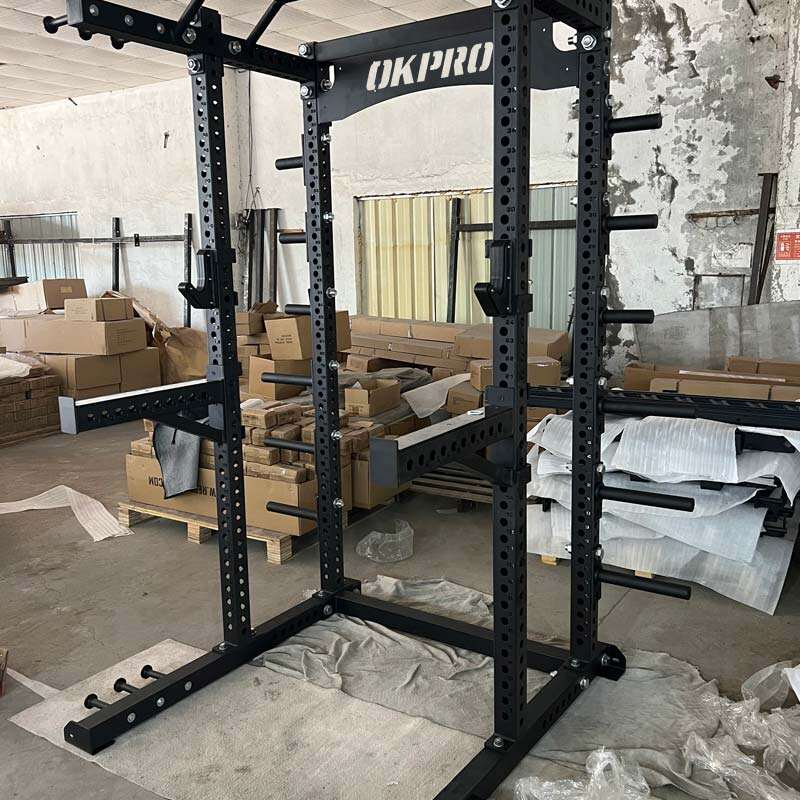
Type of Safety System Mechanism Considerations for Commercial Use
Pin-Based Safety System Steel pins that can be inserted through holes Requires manual adjustment, but is load and lift pattern reliable
Barbell-Activated Safety System Roller arms that are activated by the descent of the barbell Requires less time, more accommodating of variations of user technique for safety during lifts
A pin-based safety system is simple, durable, and reliable, but takes longer to adjust for each user. Barbell-activated mechanisms provide instantaneous response to bar path and are therefore more accommodating for safety during lifting of less experienced users. Both Pin-based and barbell-activated safety systems can significantly minimize loss from catastrophic failures, provided that the systems are properly maintained. Safety systems are designed to endure impact without causing significant change to shape or location of system.
FAQ
What are the primary types of power racks?
The primary types of power racks include full power racks, half racks, and squat stands. Full power racks are best for building a dedicated strength zone, half racks serve a similar function in a more space-efficient manner, and squat stands are small and portable, but have no integral safety mechanisms.
What are some of the essential steel specifications for commercial power racks?
Commercial power racks should be constructed using steel of 11-gauge (>3
mm thick) for a durable frame, with precision welding that meets the standards of AWS D1.1, and reinforced uprights.
How do power racks make gym spaces more efficient?
The integrated storage and combo function power racks can offer significant savings on floor space (up to 20%) by including essential storage for weight plates and multifunctional workout stations.
What safety features should commercial power racks include?
Safety features can include safety catches rated for over 1,000 lbs, J-hooks with steel sleeves, Westside hole spacing, and snapping or barbell-activated safety systems. Additionally, adjustable safety catches and pin-based safety systems should be included.