 EN
EN

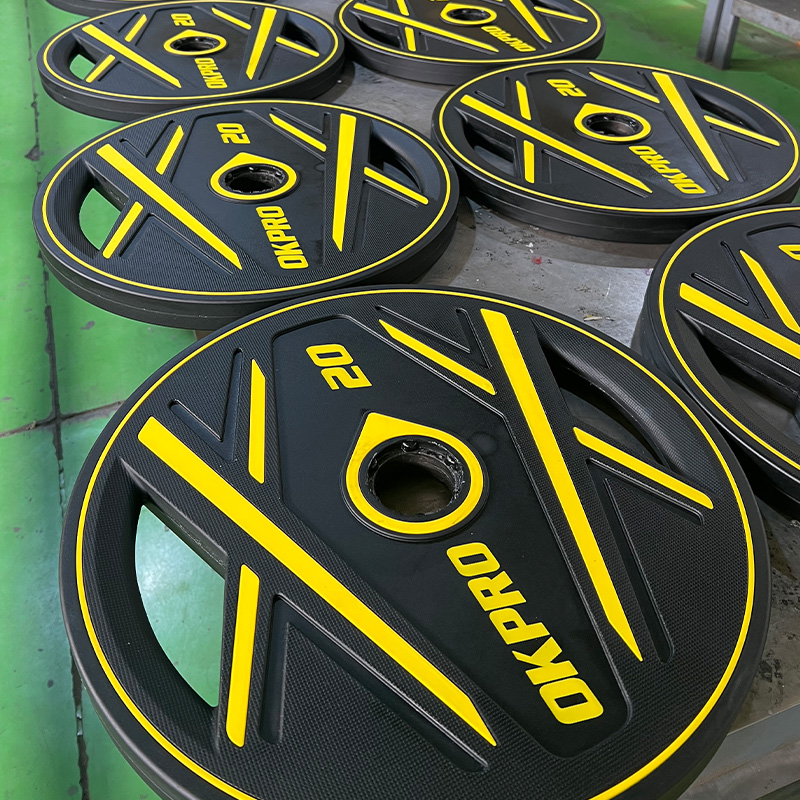
Endurance and Drop Resistance: Commercial Weight Plates Non-Negotiables
Why Cast Iron Fails With Olympic Lifts In High Traffic Areas
Repeated Olympic lifts (i.e., cleans, snatches) crack cast iron weight plates. Regular cast iron plates don't have the controlled, deliberate, shock-absorbance design of bumper plates. Cast iron plates also ruin the floor of the gym and the barbell. Leading fitness equipment studies found that unprotected cast iron plates have a lifespan shortened by 40% in a commercial setting compared to cast iron plates that are rubber-coated, thereby making them unsuitable for programs centered on high-intensity functional training (HIFT) where drops are a core component.
Impact Absorption, Floor Protection, Bumper Plates, Urethane vs. Rubber, and Long Term Testing
With specialized materials, bumper plates are the solution to the durability challenge that weight plates present. Urethane plates have a 20% lower rate of compression and a 95% rate of durometer across thousands of drops. Bumper plates made of urethane also lose their shape to a lesser degree. Urethane plates also outperform all rubber bumper plates in a commercial environment, holding their shape for a longer period of time.
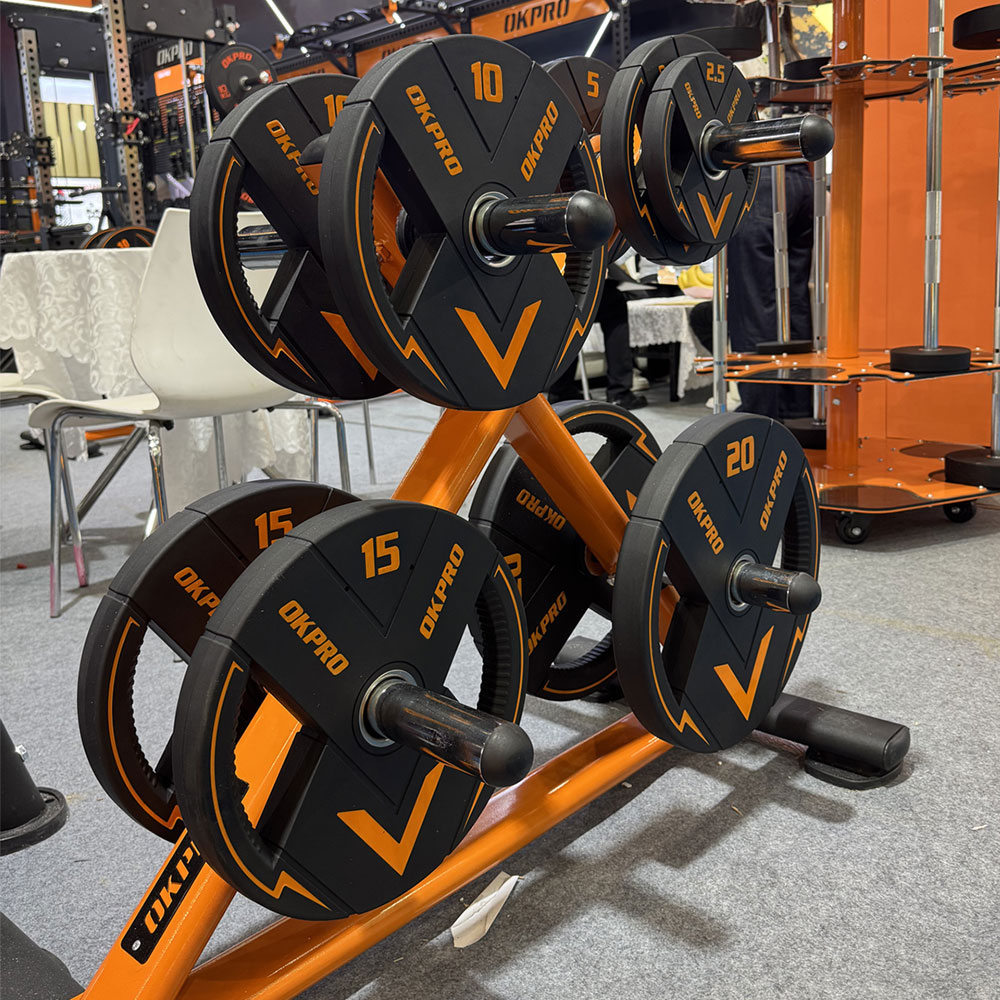
Material Impact Absorption Floor Protection Avg. Lifespan (drops)
Urethane 92% reduction 5-star rating 15,000+
Virgin Rubber 85% reduction 4-star rating 8,000–10,000
For budget-sensitive facilities, rubber cast iron plates are a good option as a low initial cost, but the integrity of the rubber layer is compromised with exposure to UV light and cleaning chemicals. Urethane plates, even with a high initial cost, provide a more worthwhile investment. Recent studies on the durability of commercial gym equipment found that the frequency of replacing rubber plates is at an average of 5 years compared to urethane plates which have a replacement frequency of 60%.
Material Performance Comparison: Urethane, Rubber-Coated, and Competition-Grade Weight Plates
Urethane Weight Plates: 95%+ Durometer Consistency and 20% Less Compression Than Virgin Rubber
Urethane plates produce consistent batches with over 95% durometer ratings, meaning that they maintain hardness and are less susceptible to high impact drops. Urethane is highly resistant to tearing, abrasion, and changing environments, which is vital for high Olift volume. Urethane is non-biodegradable, meaning it will maintain its properties regardless of the ambient conditions and durometer ratings. Urethane is a low bounce (≤5% rebound) material which reduces the load of the equipment which ultimately lessens the damage to the floor, with a long-term safety operational concern.
Rubber-Coated Cast Iron Weight Plates: Budget-Friendly Trade-Off in Resilience and Lifespan
Rubber-coated cast iron plates costing ($2.00-$3.00/lb) are a less expensive option compared to urethane ($3.00-$4.00/lb), however, these options trade off some resiliency. Rubber coating cast iron plates protects hardwood floors and reduces the noise of metal colliding, however, the coating scratches easily and can emit an odor with stagnant moisture. Rubber-coated cast iron plates have 30% faster material fatigue vs. urethane when repeatedly dropped. These cast iron plates are more than sufficient for machines (e.g., selectorized machines) that are used infrequently. These cast iron plates will likely show visible cracking from heavy use within 18–24 months and will add 15–20% to the total cost of ownership, because of replacing them more
Precision Engineering: How Tolerance, Fit, and Compatibility Preserve the Structure of the Barbell
Competing Urethane Plates = ±10 grams | Commercial Rubber Plates = ±50 to ±150 grams
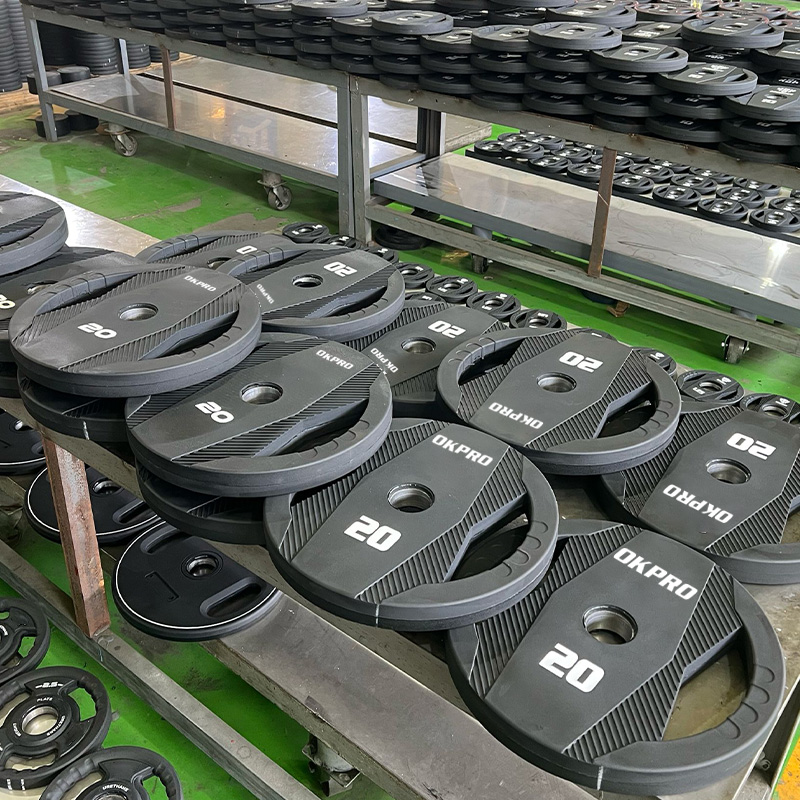
Manufacturing tolerances can make or break the longevity of the barbell and the performance of the lift. Competition-grade urethane plates have an incredible ±10 gram difference in weight, ensuring that there is a good distribution of forces across the set. Precision manufacturing will result in no uneven loading, and thus slow down the wear caused by loading the barbell. Commercial rubber-coated plates can have a manufacturing tolerance of ±50 to ±150 grams per plate—with cumulative imbalances that can reach over 600 grams on one side during lifts. This causes bushing failure and bar bending. For busy commercial gyms, the advantage of using tighter tolerance plates is that the integrity of the barbell is preserved, and the results of the lifts are more consistent.
Analyzing the Total Cost of Ownership: Evaluating the Upfront Expenditures and the True Cost of Operations Over a 3-Year Period
When evaluating the cost of weight plates, a lot of commercial gym operators focus primarily on the cost of the plates. The operators often choose the cheapest weight plates; however, doing so often leads the operators to make the most expensive choice. The Total Cost of Ownership (TCO) shows the costs associated with the acquisition of weight plates, and the operational maintenance costs that gyms will incur over the 3-year period. A lot of gyms incur costs associated with the maintenance of deteriorating weight plates, the frequency with which the gym must purchase replacement plates after damaging plates, the cost that the gym incurs to dispose of the weight plates, and the cost that the gym incurs to replace the gym’s equipment. Premium urethane plates typically command a 30-50% higher initial investment than rubber-coated alternatives but demonstrate 40% lower replacement rates and higher retained residual value. This durability advantage often reverses the cost equation by year two, making urethane plates’ 3-year TCO 15-25% lower despite the steeper purchase price. Facility managers should also account the costs associated with interruptions in training caused by the replacement of plates, and the cost of member dissatisfaction caused by the presence of worn equipment.
Frequently Asked Questions
Why do cast iron weight plates break after performing Olympic lifts?
Cast iron plates absorb no impact, and after being Olympic lifted and dropped repeatedly, sustain injuries. Cast iron plates should not be used in weight training environments with high impact.
What are the advantages and disadvantages of urethane plates and rubber-coated plates?
Urethane plates last longer and are more durable than rubber-coated plates, especially in environments where the humidity is high and in environments where reactive cleaning agents are used to clean the gym.
What are the advantages of tightly controlled manufacturing tolerances for weight plates?
The advantage of a tighter tolerance such as the ± 10 g for urethane plates is that there is a more even distribution of the force across the plates leading to less wear on the bar and a better overall lifting experience. When a rubber plate has a loose tolerance, it will damage the bar and create an uneven lift.
What is the Total Cost of Ownership (TCO) for urethane and rubber-coated plates?
Urethane plates cost more initially, but due to less replacement, longer life, and better residual value, they have a lower Total Cost of Ownership (TCO) in 3 years compared to rubber-coated plates.
Is it worth paying more for urethane plates?
Yes, urethane plates are the better choice for high-use gyms since they will be more cost-effective over the long-term due to needing less replacement and having less overall maintenance.