 EN
EN

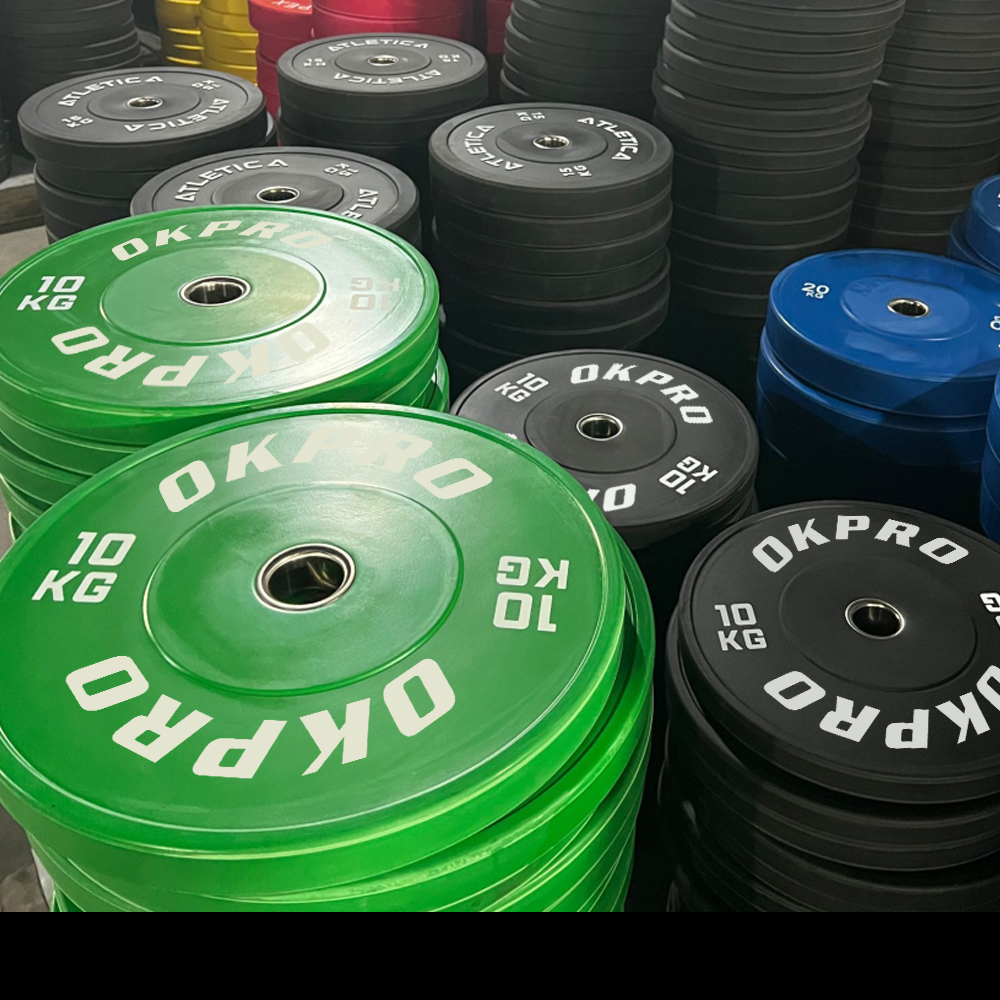
Snatch and clean & jerk create extreme physical stress on weight plates. When athletes drop a loaded barbell from an overhead position at a height of 1.8 to 2.2 meters, the bar hits the ground at a speed of 6–7 meters per second.
Sudden braking creates peak impact force more than 10 times the total load weight. All pressure concentrates on the edge where the weight plate touches the bar sleeve, forming high-stress areas that test material quality severely. Without effective shock absorption, the impact force will damage the barbell, floor and plates continuously, cause unstable lifting posture, and raise the risk of sports injury.
Cast iron has brittle material properties and cannot absorb kinetic energy during drops. Tiny cracks keep expanding after each overhead drop.
Besides, most cast iron plates have a smaller diameter than the international 450mm standard. The contact area becomes much narrower, increasing ground pressure by up to 300%. This not only cracks concrete and ruins rubber floor mats but also loosens bar sleeves and deforms metal parts over long-term training.
Independent durability test data clearly shows the gap between cast iron and bumper plates:
表格
| Plate Type | Impact Survival Rate | Floor Pressure Increase |
|---|---|---|
| Cast Iron | Only about 500 repeated drops | Up to 300% higher pressure |
| Bumper Plates | Over 50,000 repeated drops | Only 10% higher pressure |
Most cast iron plates crack after 500 drops with 70% of maximum load. For elite training with more than 50 repetitions every day, iron plates become disposable consumables with extremely high replacement costs.
High-Grade Rubber Formulation Delivers Stable Shock Absorption
High-quality bumper plates adopt rubber or polyurethane raw materials with Shore A hardness between 90 and 100. This hardness achieves a perfect balance: the material deforms to absorb impact energy while avoiding excessive rebound that disturbs bar stability.
Top manufacturers only use virgin rubber instead of recycled mixed materials. Even density keeps the hardness consistent year after year and prevents permanent compression deformation. The built-in rust-proof steel hub strengthens the whole structure, so the central sleeve never falls off or bends under heavy repeated impacts. After years of high-volume training, these plates still maintain even weight distribution and precise calibration.
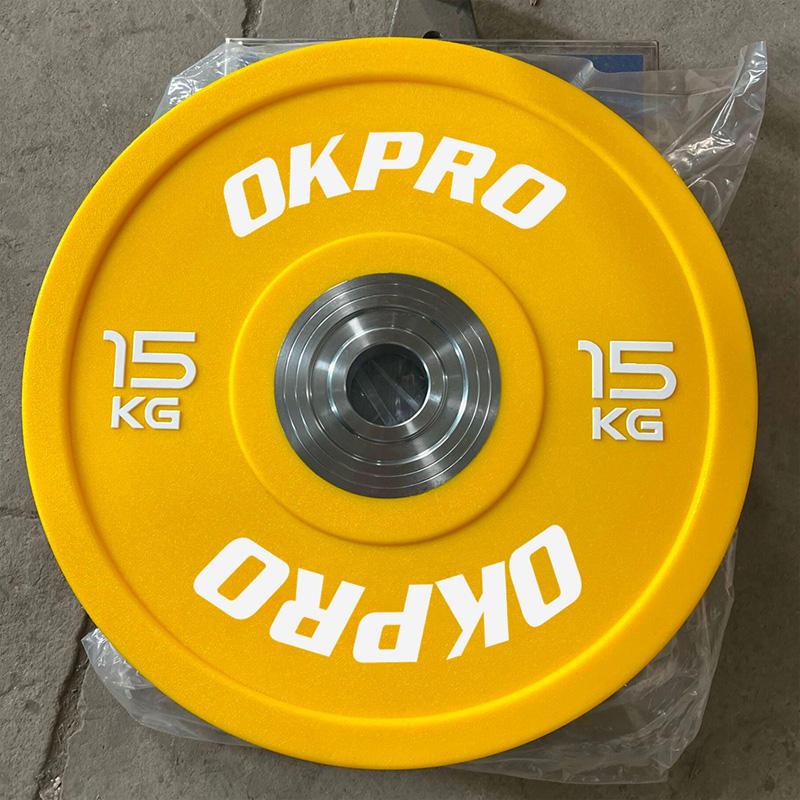
Competition-grade bumper plates must pass strict durability tests formulated by the International Weightlifting Federation (IWF). Testers simulate decades of high-intensity training by dropping the plates overhead more than 50,000 times on reinforced concrete ground.
Only products that meet all the following standards can obtain formal certification:
- No cracks or peeling on rubber and polyurethane surfaces
- Permanent deformation controlled below 2%
- Weight error kept within ±10 grams
- The steel hub stays tight without shifting or loosening
For commercial gyms, CrossFit boxes and university strength training halls, certified bumper plates turn frequent consumables into long-term fixed assets with low maintenance costs.
Noise Reduction and Floor Protection for Commercial Gym Facilities
Noise control and infrastructure protection are major concerns for gym operators. Metal plates hitting concrete produce sharp high-frequency noise. Rubber bumper plates convert violent impact into low-frequency vibration, cutting noise volume by up to 70% (OKPRO industry test 2023).
The energy-absorbing rubber layer protects concrete floors, rubber platforms and substructures from cracking and denting. Fewer noise complaints from surrounding residents and less floor maintenance greatly reduce long-term operating costs of fitness venues.
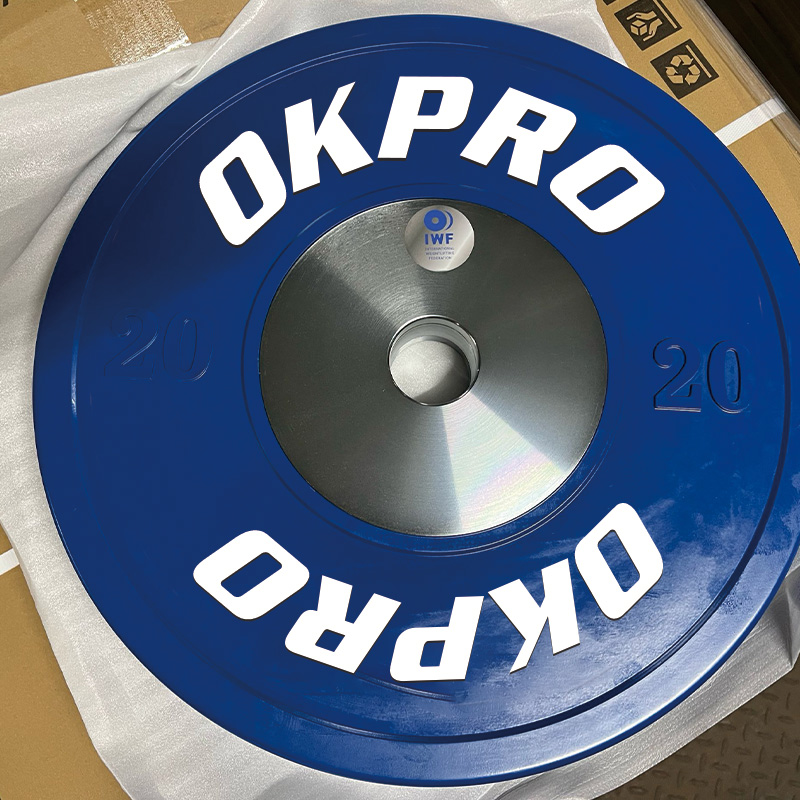
Core IWF Certification Standards for Competition-Grade Bumper Plates
IWF sets unified global specifications for Olympic weightlifting equipment. Any gym hosting official competitions must equip certified bumper plates. Three hard indexes cannot be ignored:
- Diameter: Strictly 450 mm with a tolerance of ±1.5 mm to match all standard Olympic barbells and lifting platforms
- Weight precision: Within ±10 grams to guarantee fair competition and accurate progressive training
- Rebound limit: The maximum bounce height after impact cannot exceed 10 mm, which prevents the bar from swinging sideways and keeps athletes safe.
The 50.4mm central hole fits tightly on bar sleeves and further weakens vibration. These standards come from long-term biomechanical experiments and thousands of international competitions. Purchasing IWF-certified plates means investing in safer training and more standardized venue construction.
FAQ
Why can’t cast iron plates be used for Olympic lifting?
Cast iron cannot absorb impact energy. Brittle texture causes continuous microcracks after repeated drops. The small contact area raises ground pressure sharply, damaging floors and creating hidden safety risks.
What structural advantages do bumper plates have?
Premium bumper plates use pure rubber materials with ideal hardness plus reinforced steel hubs. They absorb impact effectively and pass the IWF 50,000-drop durability test without deformation.
How much noise can bumper plates reduce?
Rubber material turns sharp metal impact into low-frequency thuds, cutting noise levels by up to 70% compared with cast iron plates on concrete floors.
What does IWF certification cover for bumper plates?
Certified products meet strict requirements on diameter size, weight accuracy and bounce height, which fully meets the standard of international Olympic weightlifting events.
What is the service life of certified bumper plates?
IWF-approved bumper plates withstand more than 50,000 overhead drops. They remain stable for decades of daily high-volume training without obvious aging or damage.
Table of Contents
- Why Ordinary Cast Iron Plates Break Quickly in Olympic Lifting Training
- High-Grade Rubber Formulation Delivers Stable Shock Absorption
- IWF Drop Test: 50,000 Impacts Without Structural Damage
- Noise Reduction and Floor Protection for Commercial Gym Facilities
- Core IWF Certification Standards for Competition-Grade Bumper Plates
- FAQ