 EN
EN

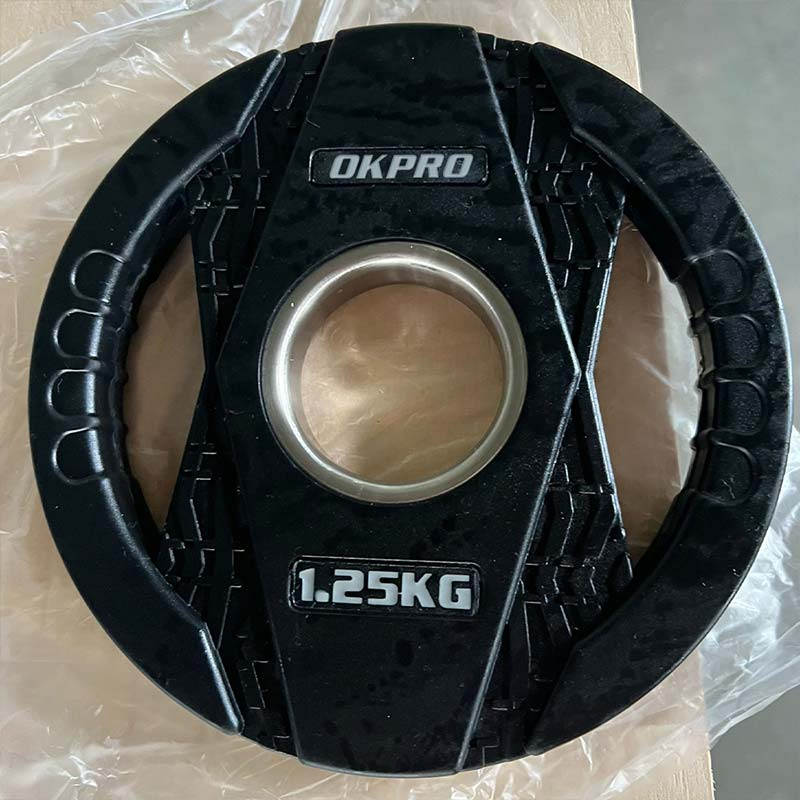
Every fitness coach and strength athlete recognizes progressive overload as the non-negotiable foundation of muscle growth and strength improvement. Simply put, the body only gets stronger when training resistance increases gradually and consistently over time. Standard weight plates are the only gym tool that enables safe, fine-tuned load progression for all skill levels.
Unlike fixed gym machines that offer large, rigid weight jumps, traditional weight plates support incremental adjustments of 2.5 to 5 pounds per session. Sports science research confirms that gradual load increases of 2.5% to 5% per week deliver the most sustainable strength gains while drastically lowering overloading injury risks. For advanced lifters stuck on training plateaus, tiny fractional plates of 1.25 pounds or less make small but meaningful progress possible, breaking long-term strength stagnation that standard weights cannot resolve.
Barbell training with weight plates delivers far more functional fitness benefits than machine-only workouts. Free-weight instability actively activates full-body stabilizer muscles and improves bodily proprioception, helping athletes build coordinated, real-world strength instead of isolated muscle tension.
A 12-week official study published in the Journal of Strength and Conditioning Research verified that lifters using plate-loaded barbells achieved 23% higher overall strength gains than participants training only on fixed machines. Three core advantages create this performance gap: multi-joint muscle recruitment that mimics natural movement, stronger eccentric muscle tension during lowering motions that triggers better hypertrophy, and full-range neural engagement that trains high-output motor units. For anyone pursuing raw strength and muscle mass, plate-based training remains the most efficient method available.
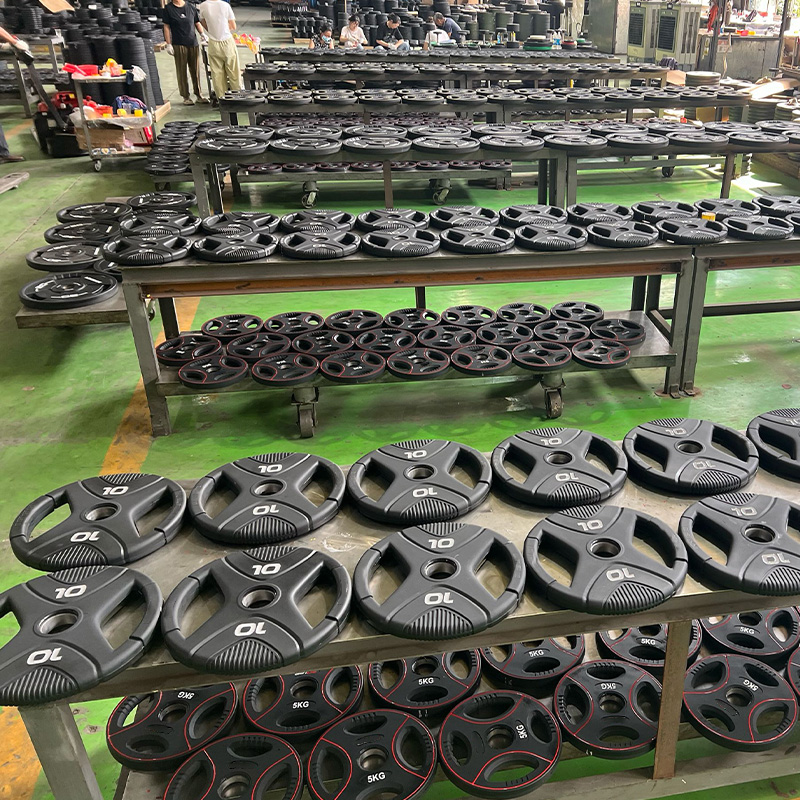
Standardized Plate Dimensions Support All Strength Training Disciplines
Modern competitive and functional fitness entirely relies on universally standardized weight plates, featuring a 2-inch central hole and 450mm outer diameter. This unified specification is mandatory for Olympic lifting, powerlifting, and daily functional fitness training worldwide.
Olympic lifting requires consistent bar height and balanced plate distribution for clean, snatch, and jerk movements. Powerlifting depends on precise plate thickness to maintain correct deadlift and bench press starting postures. Functional fitness movements, including plate carries and wall ball variations, require uniform sizing to ensure safe, balanced motion. Non-standard plates create inconsistent body positioning, unbalanced load distribution, and higher injury risks during high-intensity training. Universal sizing also guarantees full compatibility across all commercial gyms and official competition venues.
Standard Olympic weight plates feature seamless interoperability with almost all core gym equipment, maximizing training diversity and workspace efficiency.
| Equipment Type | Compatibility Benefit | Common Training Application |
|---|---|---|
| Olympic Barbells | Smooth sliding fit + collar locking stability for heavy loading | Back squats, bench presses, deadlifts, overhead presses |
| Power Racks & Cages | Consistent plate height matches rack safety systems | Spotter protection, failed lift safety support, weighted pull-ups |
| Landmine Attachments | Flexible incremental loading for rotational and unilateral moves | Single-arm rows, rotational presses, anti-rotation core training |
| Plate-Loaded Machines | Universal weight adjustment replaces proprietary stacks | Leg press, chest press, cable crossover workouts |
This high compatibility allows athletes to switch freely between compound lifts, accessory training, and functional movements without replacing equipment. It streamlines workout flow, reduces setup time, and creates a more flexible training environment for both commercial gyms and home gym setups.
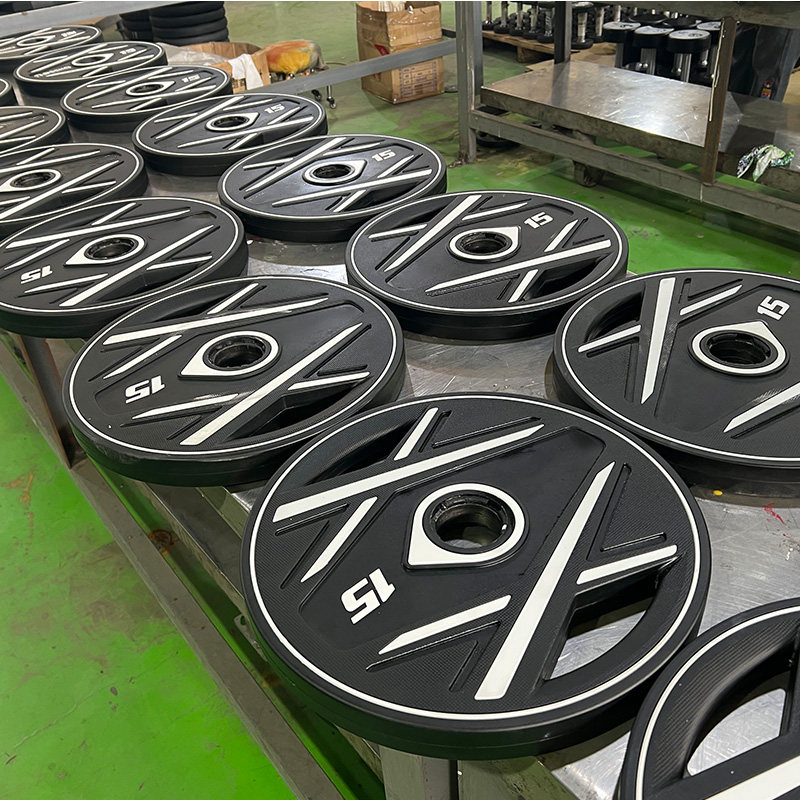
Choosing the right plate type directly impacts training safety, durability, accuracy, and long-term gym investment value. Three mainstream plate categories serve completely different training scenarios.
| Attribute | Bumper Plates | Cast Iron Plates | Calibrated Plates |
|---|---|---|---|
| Durability | Excellent drop resistance, built for dynamic Olympic lifting | Solid for static lifting, easy to chip or crack when dropped | High-precision steel build, not designed for repeated dropping |
| Weight Accuracy | Moderate tolerance (±2–3%) | Low tolerance (±2–5%) | Ultra-high precision (±0.5–1%) |
| Safety Performance | Low bounce, floor-protective, quiet impact | Sharp edges, loud impact, unpredictable bouncing | Safe with proper handling, many with noise-reducing coating |
| Cost Level | Mid to high cost per pound | Most budget-friendly option | Highest cost due to precision machining |
Bumper plates are the top choice for dynamic lifting and Olympic-style training. Cast iron plates offer cost-effective daily strength training for general users. Calibrated plates deliver accurate load control for competitive athletes and precise progressive overload planning.
FAQ
Why is progressive overload critical for strength training?
Progressive overload ensures continuous neuromuscular adaptation by gradually increasing workout resistance, enabling steady muscle growth and strength improvement without training plateaus.
What benefits do fractional weight plates provide?
Fractional plates enable ultra-small load increments, allowing advanced lifters to make micro-progressions and break stubborn strength plateaus effectively.
Why do gyms use standardized weight plates?
Standard 2-inch hole, 450mm plates ensure universal equipment compatibility, consistent movement mechanics, and safer training across all strength and fitness disciplines.
Which weight plates are best for general gym use?
Cast iron plates suit budget-friendly daily training, bumper plates fit dynamic and Olympic lifting, and calibrated plates work best for precise competitive strength progression.