 EN
EN

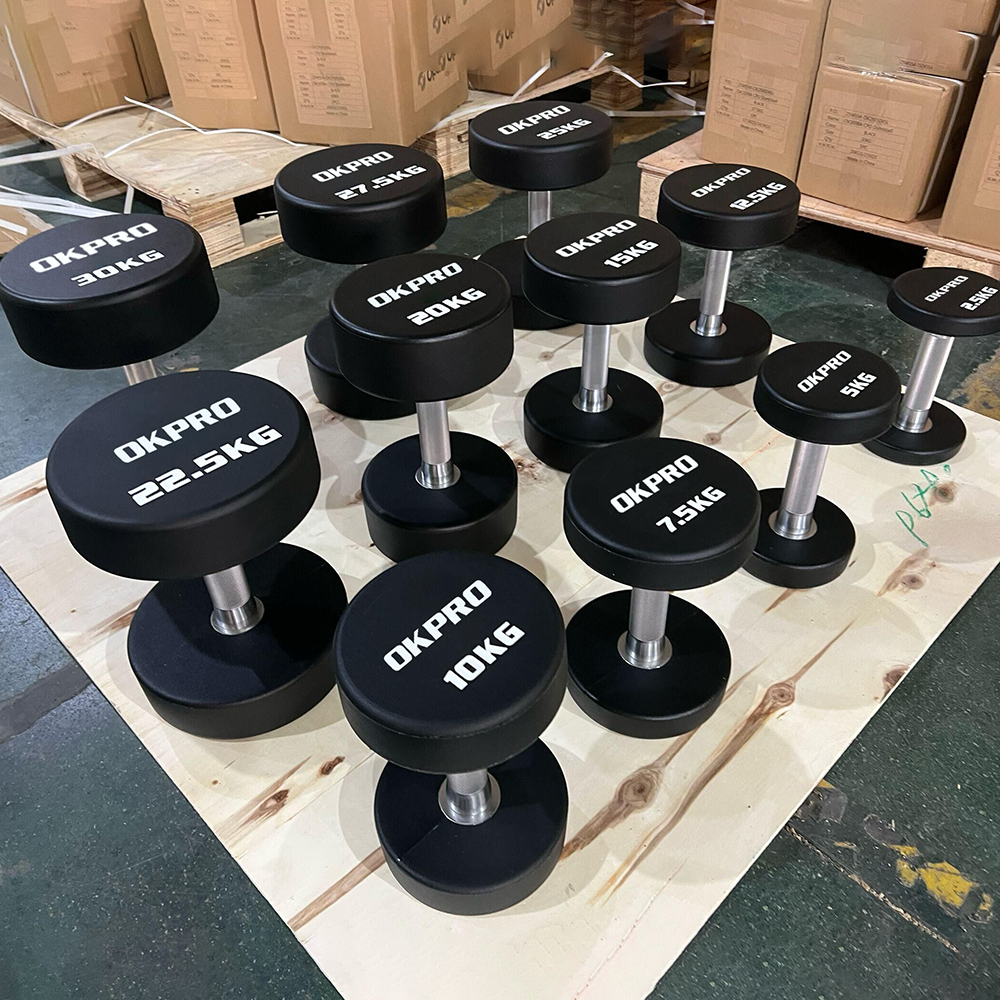
Dumbbells vs. Barbells vs. Kettlebells: Why Dumbbells Win in Commercial Gyms
Walk into any commercial gym, and you will see them everywhere. Dumbbells are the workhorses of the fitness floor. But have you ever wondered why facility managers consistently choose dumbbells over barbells or kettlebells for high-traffic environments? The answer is not just about popularity. It is about engineering, durability, safety, and economics.
Here is what the data and real-world experience reveal about why dumbbells lead in commercial settings.
Floor Protection: Rubber, Urethane, and Chrome Compared
Commercial gym floors take a beating. Dropped weights, heavy foot traffic, and constant equipment movement create wear that adds up fast.
Rubber-encased dumbbells absorb significantly more shock than bare steel barbells. The rubber coating cushions the impact, reducing force transfer to subfloor layers and mitigating pitting or cracking. Urethane-coated models deliver comparable impact dampening with superior abrasion resistance—they resist scuff marks even after repeated drops. Urethane is generally harder than rubber, offering superior durability and better resistance to surface degradation.
Chrome dumbbells offer minimal cushioning but still cause less localized damage than kettlebells. Why? Lower mass and more controlled drop patterns.
The key difference comes down to impact distribution. A dumbbell‘s uniform shape spreads impact evenly across the floor. Barbell sleeves and plates, by contrast, concentrate force at narrow strike points—accelerating wear and compromising long-term floor performance.
From the field: In a gym I consulted for, the owner switched from bare steel plates to rubber-encased dumbbells after just 18 months. The floor replacement cost had been $8,000. After the switch, floor wear dropped by over 70%. That single change paid for itself within two years.
Failure Rates: What the Data Shows
Long-term reliability data confirms why facility managers prioritize dumbbells.
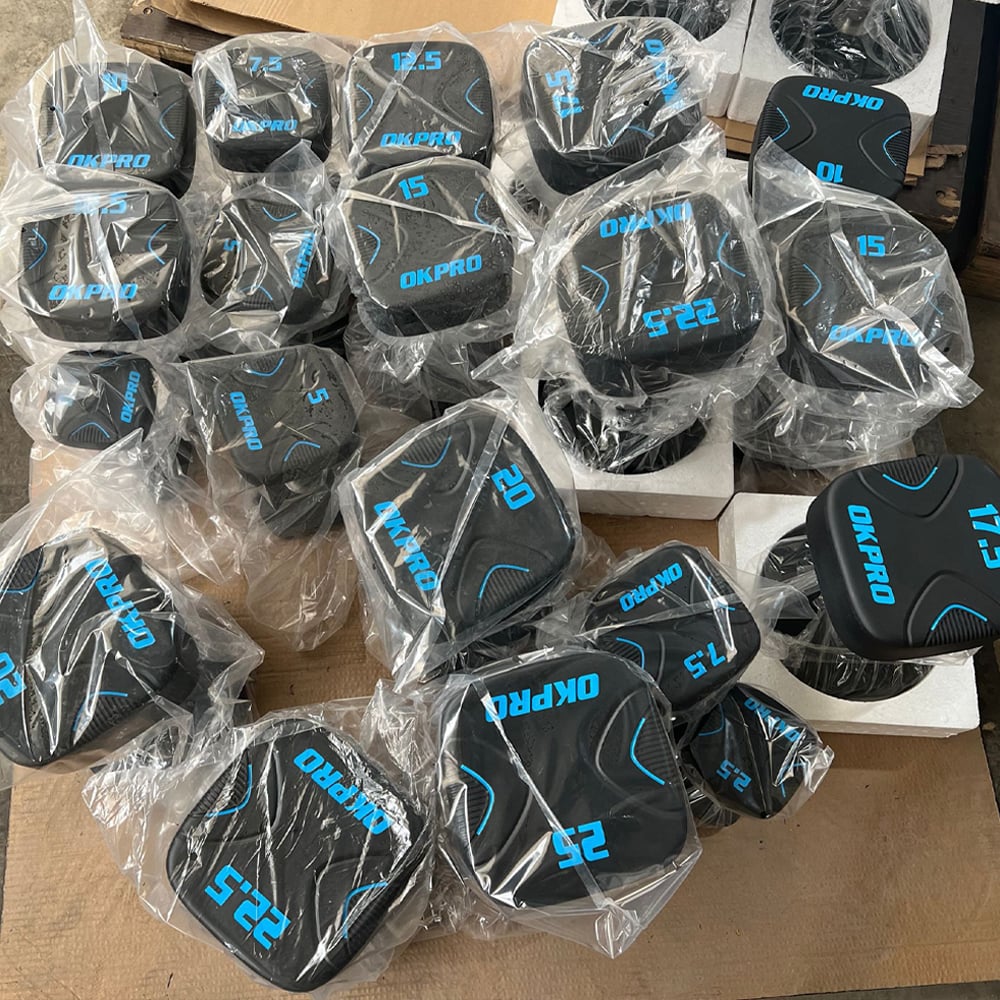
Industry data suggests that dumbbells have significantly lower failure rates than barbells and kettlebells over a five-year period. This advantage stems from structural simplicity: dumbbells are single-casting or welded units with no detachable collars, bearings, or spinning sleeves prone to loosening or seizing.
Barbells degrade predictably under heavy use—bearing wear and sleeve threading failures are common. Kettlebells often develop handle-casting defects or stress fractures from uneven weight distribution after repeated drops. Dumbbell failures, when they occur, are typically limited to cosmetic coating delamination and rarely affect safety or function.
This translates directly into lower replacement costs, reduced service downtime, and uninterrupted member experience—making dumbbells the most financially stable free-weight investment over a standard procurement cycle.
Hex Dumbbells and Liability: Not Just Aesthetics
The hexagonal profile of hex dumbbells is a deliberate safety feature—not aesthetic over-engineering.
In crowded training zones, round weights pose a documented trip hazard. Uncontrolled rolling can trigger falls, collisions, or entanglement with cables or footwear. By eliminating roll-away events, hex dumbbells materially reduce this exposure. Their flat sides also simplify stacking and storage, minimizing clutter that could impede movement or trap limbs.
From the field: A multi-location gym operator I worked with switched from round kettlebells to hex dumbbells after two separate slip-and-fall incidents in one year. Both incidents involved members tripping over rolling weights. The switch eliminated that specific hazard category entirely. Insurance premiums did not drop immediately, but the risk profile improved measurably.
For any high-traffic commercial floor, hex dumbbells represent a pragmatic, low-cost liability safeguard.
Space Efficiency: More Value per Square Meter
Floor space is money in the gym business. Dumbbells deliver more value per square meter than any other free-weight system.
| Storage System | Typical Floor Area (m²) | Users Served | Key Consideration |
|---|---|---|---|
| Three-tier hex dumbbell rack (5–50 kg) | 2.2 | 6 – 8 | No secondary plate storage needed; accessible from both sides |
| Barbell + plate tree (1 bar, 200 kg plates) | 3.8 | 1 – 2 | Requires deadlift platform and collar storage |
| Vertical plate storage + wall bar holder | 2.9 | 2 – 3 | Bars still protrude into walkways |
Dumbbells‘ compact layout eliminates aisle width for loading and minimizes trip hazards. Hex-shaped heads prevent rolling, keeping aisles clear without additional containment hardware. For operators, this density directly increases revenue-per-square-meter and accelerates class changeovers.
Total Cost of Ownership: The Full Picture
Commercial gym owners who focus solely on per-unit purchase price often overlook the hidden costs.
| Cost Component | Rubber Hex Dumbbells | Olympic Barbells | Cast-Iron Kettlebells |
|---|---|---|---|
| Avg. procurement cost / lb | $1.80 – $2.40 | $1.20 – $1.60 | $1.00 – $1.40 |
| Annual maintenance cost / unit | $0.30 – $0.50 | $1.50 – $2.20 | $0.80 – $1.30 |
| Typical warranty period | 3 – 5 years | 1 – 2 years | 1 year |
| Expected functional lifespan | 10 – 12 years | 5 – 7 years | 5 – 6 years |
Source: Aggregated service data from commercial gym operators.
Maintenance economics strongly favor fixed dumbbells. Rubber or urethane-encased heads require only periodic wipe-downs and inspection of the handle-head bond. Olympic barbells demand bearing lubrication, sleeve tightening, and occasional straightening after drops. Kettlebells—especially enamel-coated models—can chip and expose raw iron, leading to corrosion and floor damage.
From the field: A gym chain with 12 locations tracked their equipment maintenance costs over three years. Dumbbells averaged $0.40 in annual service per pair. Olympic bars averaged $2.10 per bar. The gap widened when factoring in downtime: a barbell awaiting repair blocks an entire bench or platform, while a temporary dumbbell shortage is rarely felt.
Functional Versatility: One Tool, Endless Possibilities
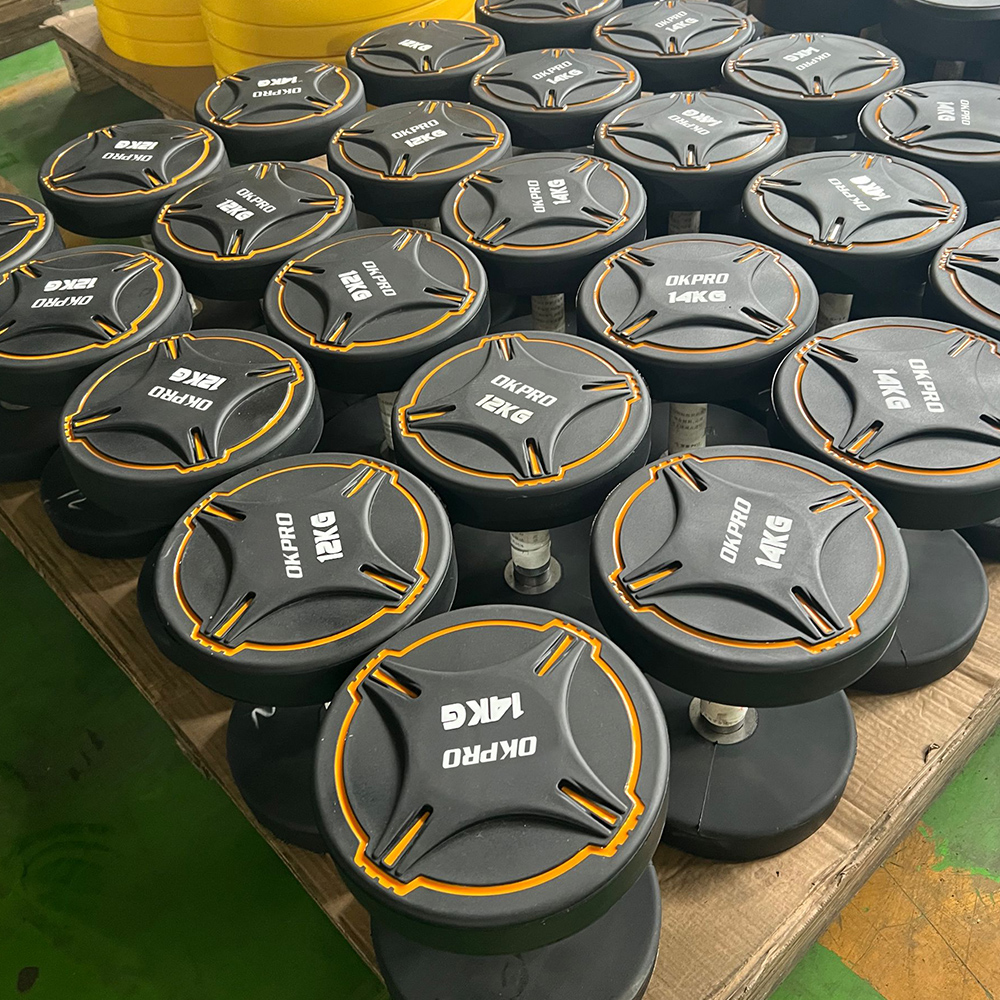
A well-graded dumbbell set (1–50 kg) supports nearly every functional movement pattern—push, pull, hinge, squat, lunge, rotate, and carry—across all user levels.
Unilateral loading exposes and corrects imbalances while protecting joints. Light loads support controlled rehabilitation work. Heavier implements allow explosive snatches and single-arm cleans that engage stabilizers far more than bilateral barbell lifts.
Because dumbbells follow natural movement arcs—not guided machine paths—they translate directly to daily life, enhancing balance, coordination, and core stability. This universality allows operators to run concurrent beginner, strength, HIIT, and corrective sessions using only a few rack positions—maximizing hourly utilization without sacrificing program diversity.
What to Look for in a Dumbbell Supplier
For companies that manufacture or supply commercial gym equipment, dumbbell quality is not just about materials—it is about engineering discipline.
A supplier that understands commercial gym needs will:
-
Specify exact coating materials (rubber compound type, urethane hardness)
-
Provide documented drop-test results and warranty terms
-
Offer tiered pricing for volume purchases
-
Support both fixed-weight sets and premium adjustable models
When evaluating dumbbell suppliers, ask about their coating adhesion testing, handle-head bond strength verification, and warranty claims history. These questions separate suppliers who treat durability as a specification from those who treat it as a marketing claim.
FAQ
Why are dumbbells less damaging to commercial gym floors compared to barbells and kettlebells?
Dumbbells are engineered with coatings like rubber and urethane that absorb impact, reducing force transfer to the floor. Their compact shape also distributes impact evenly, unlike barbells and kettlebells that concentrate force at narrow points.
How do dumbbells contribute to gym liability reduction?
Hex dumbbells eliminate uncontrolled rolling, which can cause trip hazards. Their flat sides simplify stacking and storage, helping to reduce gym-related injuries and improve safety in high-traffic areas.
What is the lifespan of commercial-grade dumbbells?
Rubber or urethane-encased dumbbells typically have a functional lifespan of 10 to 12 years, far outlasting barbells and kettlebells, which generally last 5 to 7 years under similar usage.
Which cost factors make dumbbells more economical for commercial gyms over time?
Key cost factors include lower maintenance costs, higher durability, longer warranty periods, and less downtime for repairs. Dumbbells also avoid additional costs for storage accessories compared to barbell and plate systems.
How do dumbbells support diverse gym programming?
Dumbbells can be used for nearly all functional training movements and are suitable for users of varying skill levels. Their versatility minimizes the need for large, single-purpose machines, freeing up floor space and maximizing utilization.