 EN
EN

Meta Description: Discover why urethane dumbbells outperform rubber-coated alternatives in high-traffic gyms. Impact resistance, floor protection, noise reduction, and 5-year cost savings analysis.
Published: July 10, 2026
Introduction
Commercial gym operators face a constant challenge: selecting equipment that withstands heavy daily use while protecting floors and controlling long-term costs. Urethane dumbbells have emerged as the premium choice for high-traffic facilities. This guide examines the durability, floor protection, noise reduction, and total cost of ownership that make urethane the smart investment for serious gym owners.
Impact Resistance and Industry-Leading Warranty
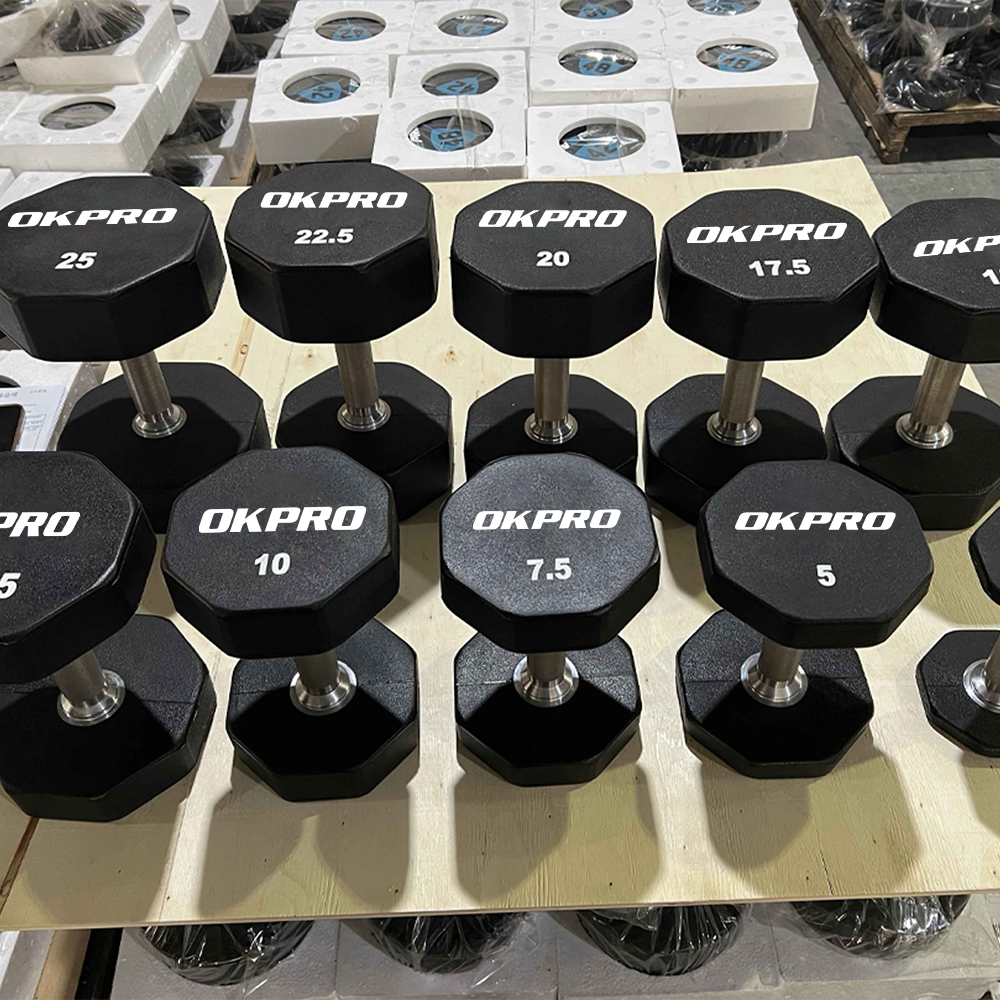
Urethane dumbbells are engineered for the rigors of commercial gym use. A thick, impact-absorbing polyurethane coating encases a solid steel core, significantly reducing cracking, chipping, or delamination even after repeated drops.
In lab testing simulating high-volume use (10,000+ cycles), premium urethane coatings showed less than 0.2 mm of surface wear—less than one-fifth the 1.0 mm wear observed in standard rubber coatings (Independent Equipment Testing, 2023). This resilience underpins the industry's gold-standard 10-year coating warranty—a benchmark rarely offered with rubber-coated alternatives.
For gym operators managing strength zones with over 300 daily member interactions, that warranty translates into predictable equipment life and substantially lower replacement frequency.
Floor Protection: 72% Less Indentation vs. Rubber-Coated Dumbbells
Urethane's energy-dissipating properties protect more than just the dumbbell—they safeguard the floor beneath it.
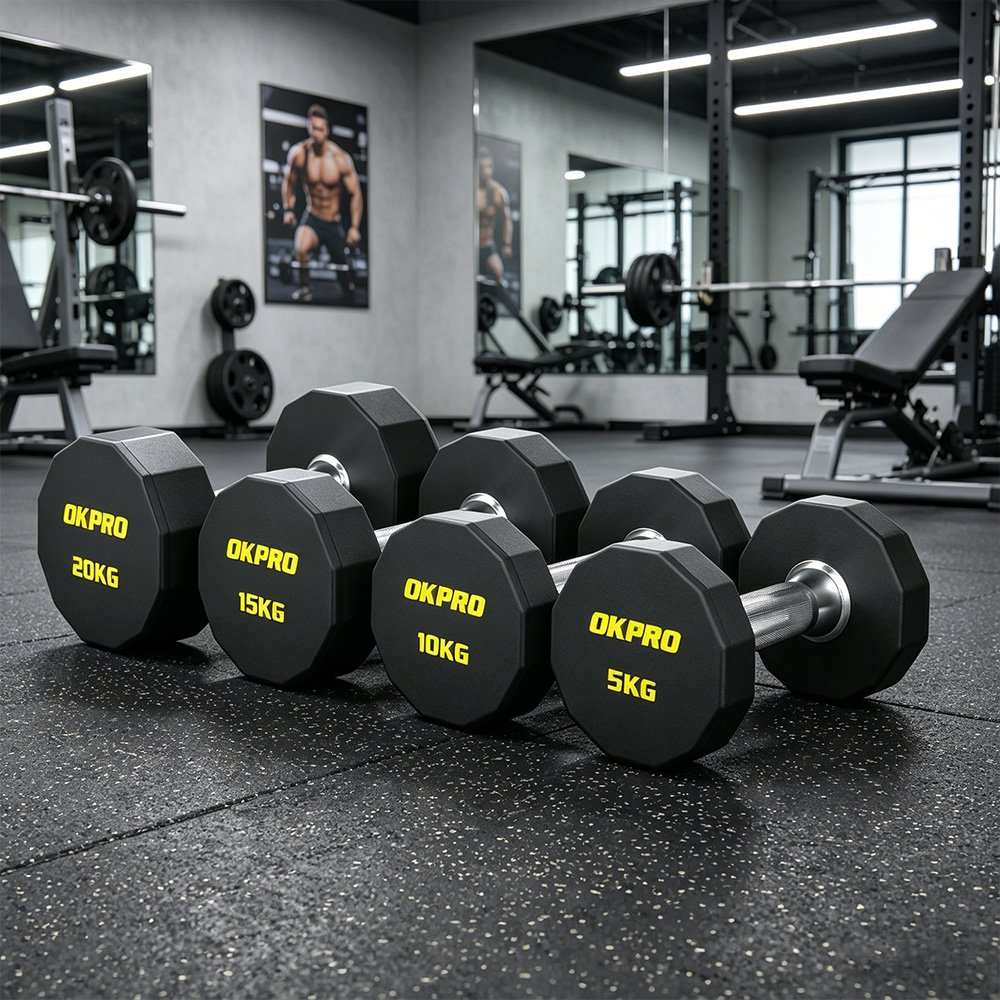
Drop tests from 1 meter onto 3,000 psi concrete revealed urethane dumbbells caused 72% less indentation than rubber-coated equivalents:
| Dumbbell Type (10 kg pair) | Drop Height (cm) | Average Indentation (mm) |
|---|---|---|
| Urethane-Coated | 100 | 4.2 |
| Rubber-Coated | 100 | 14.8 |
This dramatic reduction in peak compressive force minimizes pitting, cracking, and sub-floor damage—common triggers for costly, unplanned maintenance closures. This protection is especially critical in open-plan gyms with polished concrete or engineered wood flooring, where aesthetic integrity and slip-resistant surfaces directly affect safety perception and member satisfaction.
Choosing urethane protects both equipment investment and the structural foundation that would cost exponentially more to repair or replace.
Total Cost of Ownership: The 5-Year Financial Picture
When evaluating urethane dumbbells, gym owners must look beyond the sticker price to understand true lifetime costs.
Higher Initial Investment, Lower Long-Term Costs
Urethane dumbbells typically carry a 35–60% price premium over rubber-hex or chrome options. A 50-pair rack priced at $6,000 in rubber may cost $9,600 in urethane.
Yet heavy-use commercial gyms often replace rubber sets every 2–3 years due to casing cracks, chrome corrosion, and loosened heads—while urethane's molecular bond resists splitting, peeling, and moisture ingress, routinely delivering 7–10 years of service life.
| Cost Factor | Rubber-Hex Set | Urethane Set |
|---|---|---|
| Initial Rack (50 pairs) | $6,000 | $9,600 |
| Replacement at Year 3 | $6,000 | $0 |
| Annual Handle Maintenance | $800 ($4,000 over 5 years) | $150 ($750 over 5 years) |
| Total 5-Year Cost | $16,000 | $10,350 |
By year five, the urethane investment saves $5,650 per rack—enough to fund an additional selectorized machine. A 2022 industry survey tracking 120 commercial sites found facilities switching fully to urethane reduced equipment replacement budgets by 42% within five years.
Labor Savings: 4.2 Fewer Maintenance Hours Per Week
Rubber dumbbells shed black particulate requiring daily floor scrubbing; bent chrome handles demand frequent realignment. Urethane's non-porous surface resists grime buildup, and its compression-molded heads remain secure without adjustment.
A 2023 facility management analysis measured weekly maintenance for identical 50-dumbbell racks:
| Metric | Rubber-Chrome Set | Urethane Set |
|---|---|---|
| Weekly Maintenance Hours | 6.0 hours | 1.8 hours |
| Weekly Savings | 4.2 hours |
This 4.2-hour weekly reduction saves **$3,276 annually per rack** at a $15/hour labor rate. Across a 5-rack gym, annual labor savings exceed $16,000.
Fewer breakdowns also mean higher equipment uptime during peak hours—eliminating lost revenue from members waiting for available weights. Over five years, combined labor and downtime savings alone can fully offset the upfront urethane premium.
Member Experience: Noise Reduction and Retention
12–18 dB Quieter During Drops
Urethane dumbbells reduce drop noise by 12–18 decibels—transforming sharp, disruptive clangs into controlled, low-frequency thuds. This acoustic improvement sustains a focused, low-stress training environment.
A 2023 analysis of commercial fitness facilities linked a 12-decibel ambient noise reduction to a 9% decrease in six-month member attrition. Quieter spaces encourage longer sessions, higher visit frequency, and stronger retention—especially among clients prioritizing concentration and recovery.
Beyond comfort, subdued sound lowers staff complaints and reinforces a premium brand perception. In high-traffic zones where weight drops are inevitable, this consistent advantage keeps satisfaction high and churn low.
Design Features: Color-Coding and OEM Integration
Urethane dumbbells commonly feature color bands aligned with ANSI-compliant standards—such as purple for 5 kg and green for 10 kg—providing instant visual identification without relying on faded numerals.
In circuit training zones, rapid weight selection is essential. A 2021 IHRSA analysis found standardized color-coding cut average weight selection time by approximately 20%, improving station transitions and class throughput.
When collaborating with OEM partners, clubs can tailor color schemes to match branding while maintaining ANSI compliance—ensuring seamless integration and intuitive recognition across all touchpoints.
Frequently Asked Questions
Q: Why are urethane dumbbells more expensive than rubber-coated ones?
A: Urethane dumbbells use premium materials that resist splitting, peeling, and cracking, extending lifespan compared to rubber alternatives. Their durability and lower long-term maintenance justify the higher initial investment.
Q: How do urethane dumbbells protect gym floors better?
A: Urethane dissipates energy more efficiently during drops, causing up to 72% less indentation on concrete surfaces compared to rubber-coated alternatives.
Q: Are urethane dumbbells suitable for high-traffic gyms?
A: Yes. They are designed for rigorous use, offering superior impact resistance, reduced noise, and minimal maintenance requirements.
Q: Do urethane dumbbells require much maintenance?
A: No. They require significantly less maintenance, resisting grime buildup and not needing frequent tightening or realignment.
Q: How do urethane dumbbells enhance gym aesthetics?
A: They feature color-coded bands for quick identification, resist cosmetic wear, and reduce noise—contributing to a premium fitness environment.
Table of Contents
- Introduction
- Impact Resistance and Industry-Leading Warranty
- Floor Protection: 72% Less Indentation vs. Rubber-Coated Dumbbells
- Total Cost of Ownership: The 5-Year Financial Picture
- Member Experience: Noise Reduction and Retention
- Design Features: Color-Coding and OEM Integration
- Frequently Asked Questions