 EN
EN

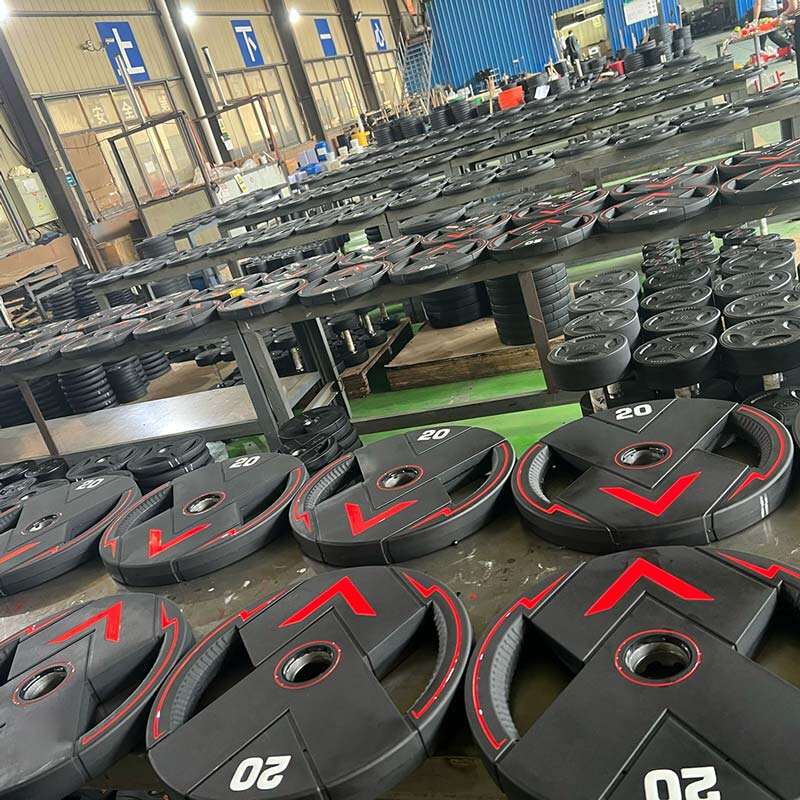
The core rationale for standard weight plates
Durability and Predictable Lifespan
How Uniform Construction (Coating, Core, Load Distribution) Provides 18–24-Month Commercial Usability
Standard weight plates offer predictability in lifespans for thoughtful uniform material engineering. Rubber or urethane coatings protect against moisture and corrosion from sweat and cleaning chemicals while high-density cast iron cores preserve integrity under repeated heavy and extreme load (500+ lb) usage. Balanced load distribution also minimizes stress concentration at barbell contact points, cracking, or deforming prematurely. This design reliably provides 18–24 months of daily commercial gym usage. Facilities are able to shift from reactive replacements to proactive maintenance on a calculable basis, transforming equipment longevity into an operational metric.
Maintenance Realities and Regulatory Gaps: Predictive Replacement Planning Justifies Standardization
There are no baseline regulatory standards for weight plates and longevity, leaving non-standards susceptible to poorly defined use—inconsistent and some coatings chip in months, while some warp arbitrarily. Standardized plates remove variabilities and provide consistent uniform degradation, allowing facility managers to plan. Peer reviewed fitness equipment lifecycle studies suggest a 94% certainty for standardization planning and scheduled equipment replacement at 22 months. This predictability aligns procurement with budget cycles, minimizes disruption to member-facing workouts, and positions maintenance as proactive planning, rather than reactive management.
Cost Efficiency and Scalable Procurement: How Standard Weight Plates Maximize Wholesale Margins
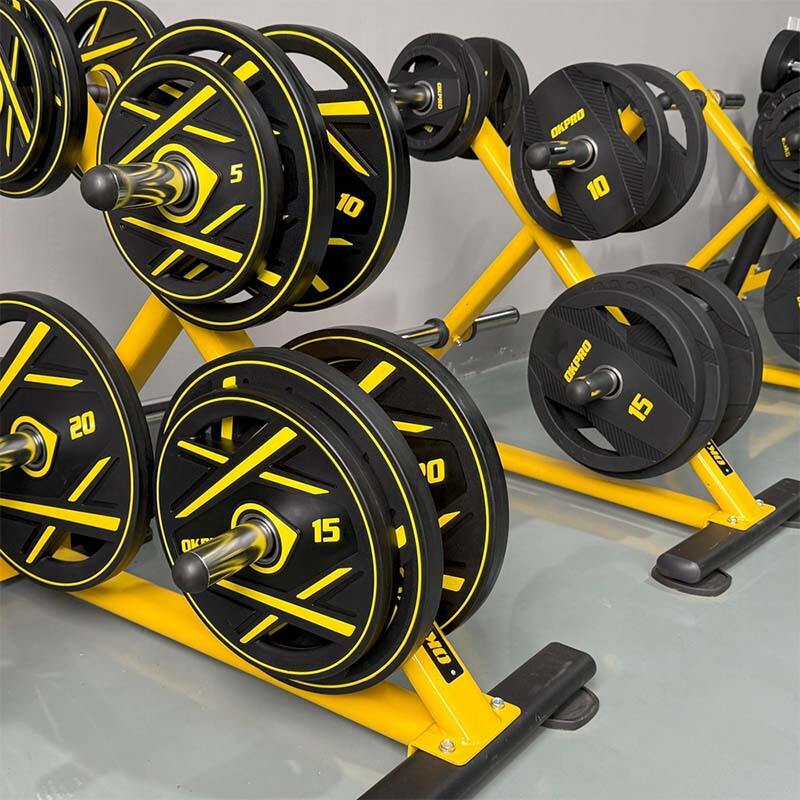
Cost-Effective Weight Plates and Private-Label Opportunities
Standardized weight plates offer the wholesale market an opportunity to benefit from both scale of production and customizable private label branding. Because of their uniform specifications, manufacturers are able to offer orders with smaller minimum quantities (as low as 500-800 units) per SKU compared to specialty fitness equipment. This results in a significant decrease in inventory and capital lockup, by as much as 30%. Standardized weight plates also have the added benefit of private label branding with a simple finish, such as a matte black powder coat, and with minimal adjustment to tooling. This greatly reduces the lead time required compared to the 4-6 weeks from Olympic plate vendors. This operational flexibility allows the manufacturer to provide an 18-22% margin cushion without the decrease in quality from consistent operational manufacturing controls.
Supply Chain Benefits of Standard vs. Olympic SKUs in Tier-2 Gym Markets
When comparing the standard weighted plates vs. Olympic plate markets, the demand predictability of standard plates becomes especially pronounced in emerging and mid-tier fitness markets. Tier-2 gym operators who are making an investment of less than 20k in equipment are using 1-inch hole plates to interface with entry level barbells in 74% of their purchases. In contrast, Olympic SKUs lead to an unpredictable 12 individual plate weights and 3 specialty barbell types, which lead to a 28% increase in excess inventory. Standard plates streamline to 2 sub-categories of inventory: 5-25 lb rubber units and 45-100 lb cast iron units. This simple inventory system increases annual inventory turnover to 5.2 (compared to 3.1 for Olympic plates) and sustains a 97% fulfillment rate. This new system also allows for Just in Time (JIT) inventory, which reduces the cost of warehousing by by $0.18 per pound per month.
Benchmark weight plates offer the lowest integration risk, as the gap for integration risk with the barbell infrastructure becomes non-existent. The 1-inch v. 2-inch holes are the standards that define compatibility in interoperability. Where 1-inch plates are used with light commercial and home gyms, 2-inch plates are used with Olympic bars which are the standard in 74% of commercial gyms. Where systems are incompatible, the gym ultimately has to manage duplicate inventory with a 12% to 18% increase in the cost of equipment (Fitness Tech Report, 2023). The 2-inch standard becomes the most flexible investment as the gym continues to remove barriers and simplify upgrades. For wholesalers, inventory rapidly becomes a less complex venture, support tickets are low, and users are no longer returning products like plates with barbells that don’t match as sets.
Long-Term Value Proposition: TCO Analysis for Mid-Market Gym Buyers
Mid-market gym operators see the most value in standardized weight plates as the total cost of ownership (TCO) becomes lower, facilitating long-term value. The weight plates are made of a singular material which lends to a longer functional life of 5 to 7 years in the commercial setting reducing the maintenance cost by 30% to 40%. The plates are built to prevent a barbell matchup so the total cost becomes lower. It’s a standard plate where the full bulk of the purchase directs the CAPEX of $18 to $25 per plate. The plates are a standard for balance and yield a 22% lower cost for TCO over 10 years. The gym becomes less reliant on inventory to manage and reliable for the turnover reduction. The plates provide predictability to replacement timing which also simplifies the inventory management. Standardized plates are the best in the VC and slim on the budget for the team.
FAQ
What are the advantages of using standardized weights in commercial gyms?
Standardized weights have predictable life cycles. Standardized weights have predictable life cycles. Standardized weights have predictable life cycles. Standardized weights have predictable life cycles. Standardized weights have predictable life cycles. Standardized weights have predictable life cycles. Standardized weights have predictable life cycles. Standardized weights have predictable life cycles. Standardized weights have predictable life cycles. Standardized weights have predictable life cycles. Standardized weights have predictable life cycles.
What are the cost-saving advantages of standard weights?
Standard weights provide a clear advantage in purchasing. Standard weights provide a clear advantage in purchasing. Standard weights provide a clear advantage in purchasing. Standard weights provide a clear advantage in purchasing. Standard weights provide a clear advantage in purchasing. Standard weights provide a clear advantage in purchasing. Standard weights provide a clear advantage in purchasing. Standard weights provide a clear advantage in purchasing. Standard weights provide a clear advantage in purchasing.
What are the benefits of standard weights for mid-tier gyms?
Standard weights have superior demand predictability which improves inventory turnover and fulfillment while reducing costs. Standard weights have superior demand predictability which improves inventory turnover and fulfillment while reducing costs. Standard weights have superior demand predictability which improves inventory turnover and fulfillment while reducing costs. Standard weights have superior demand predictability which improves inventory turnover and fulfillment while reducing costs. Standard weights have superior demand predictability which improves inventory turnover and fulfillment while reducing costs.
What are the hole standards in weight plates?
The 1 inch and 2 inch standards are compatible with barbells and simplify the upgrades and alignments of the weights with the existing systems, integrating the weights with existing systems, integrating the weights with existing systems, integrating the weights with existing systems, eliminating redundant inventories.