 EN
EN

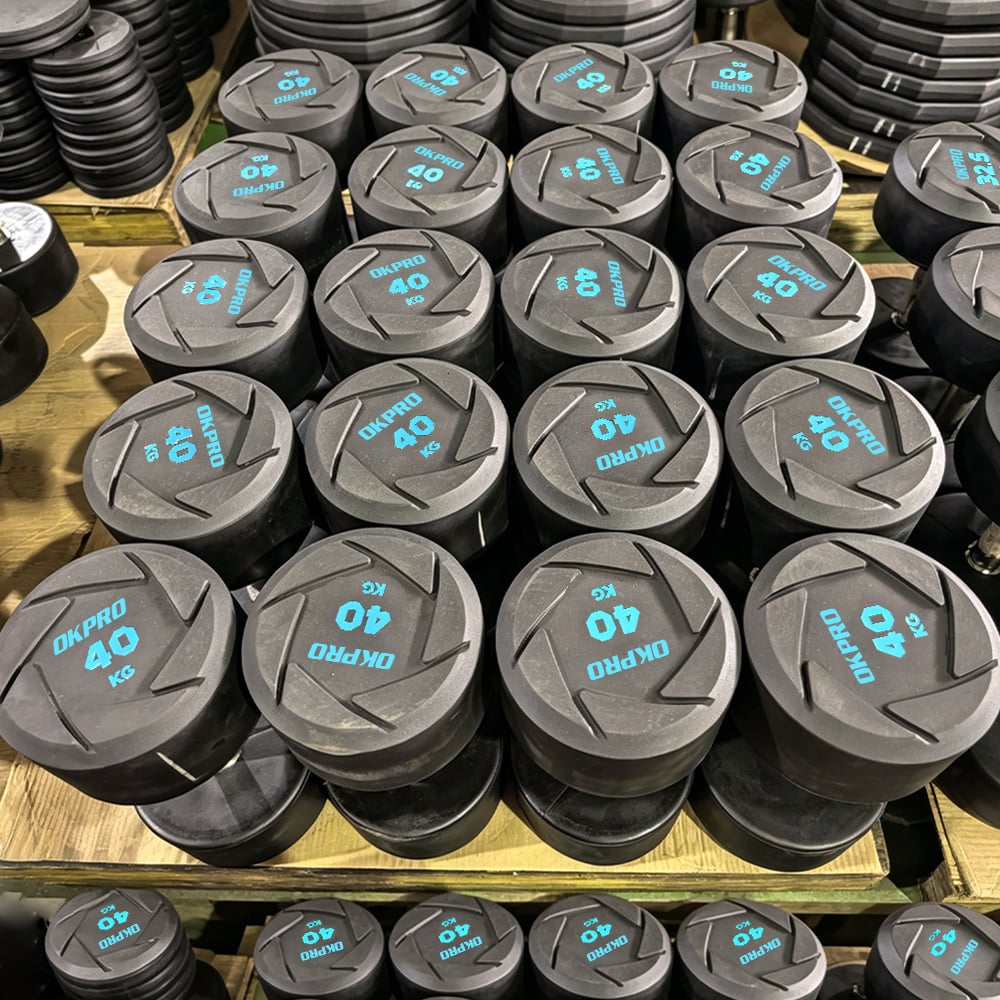
The 27% Efficiency Gain – How One Chain Solved the Floor Reset Problem
A regional gym chain with 12 locations was losing hundreds of staff hours each week to a simple problem: mismatched dumbbells. Each club had different brands, varying knurling patterns, and inconsistent weight labeling. Floor resets were chaotic—staff spent an average of 45 minutes per shift reordering racks and hunting for missing pairs. Member complaints about “unfamiliar grip feel” were rising. The operations director decided to standardize on a single urethane-encased dumbbell design across all locations. Within three months, floor efficiency improved by 27%—a metric tracking staff time spent on equipment upkeep, rack reordering, and member guidance per square foot. Staff training time for new hires dropped by 30%. Member complaints about equipment consistency fell by over 40%.
This outcome is not unusual. Over the past four years, our team has observed that standardized equipment strategies consistently deliver measurable operational gains for multi-location fitness facilities. Understanding the scalability of standardized dumbbells isn't just about equipment; it is about streamlining staff workflows, reducing overhead, and creating a consistent member experience that drives retention.
Reducing Operational Complexity – Training, Maintenance, and Replacement
When every club in a chain uses the same model of dumbbell, employee onboarding becomes dramatically simpler. New hires learn a single protocol for cleaning, inspecting, and repositioning weights—cutting initial training time by up to 30%. Equipment checks follow a consistent checklist, so staff can move between sites without retraining.
| Operational Area | Non-Standardized Approach | Standardized Approach | Improvement |
|---|---|---|---|
| Staff training time | Varies by equipment type | Single protocol | Up to 30% reduction |
| Floor reset time | 45+ minutes per shift | 10–15 minutes | 60–70% reduction |
| Replacement part inventory | Multiple suppliers, varying specs | Single parts library | Simplified procurement |
| Member complaints | Inconsistent grip, labeling | Uniform experience | >40% reduction |
Maintenance burdens shrink too: uniform sets share interchangeable parts, and a global service contract covers all locations. If a 50-pound hex head wears out, the replacement matches the rest of the rack exactly—preserving visual order and preventing mismatched grip diameters that frustrate members. Standardization also simplifies inventory: a central parts library supplies multiple gyms, eliminating hours wasted hunting for obscure, model-specific collars.
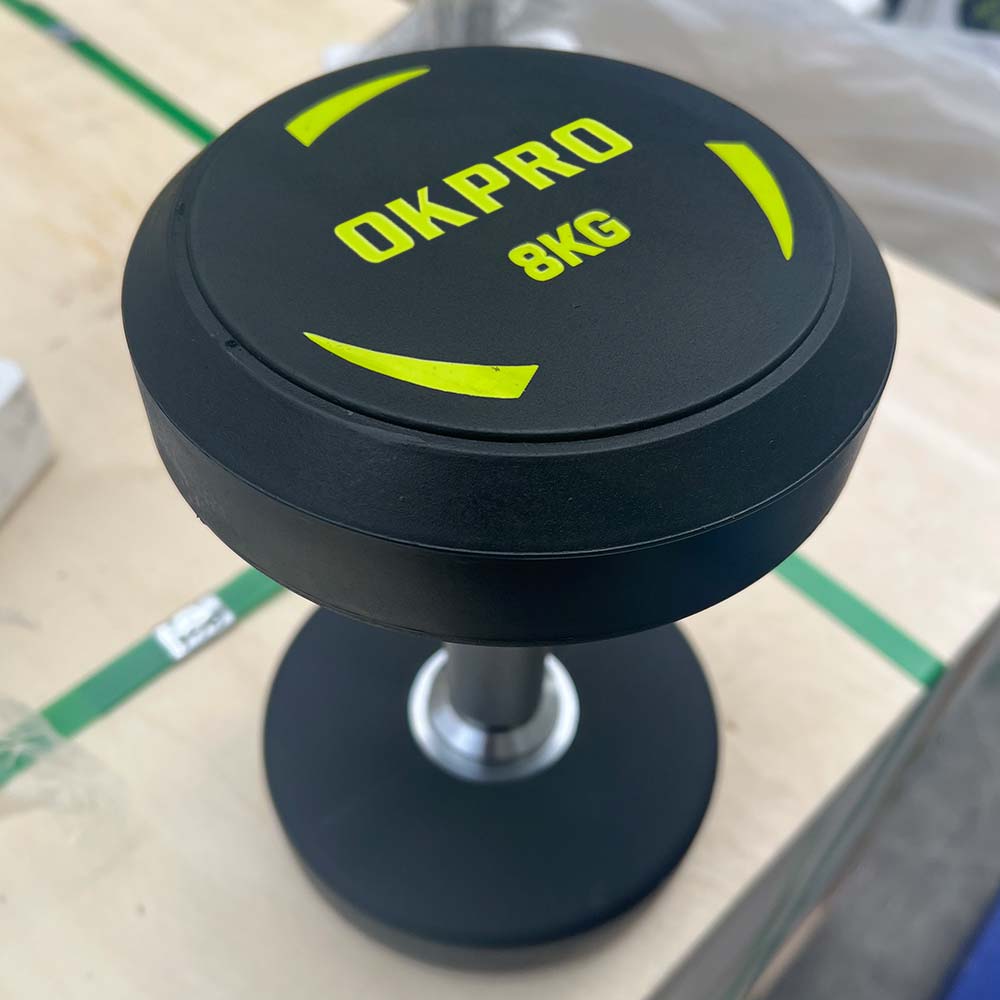
Case Study – Planet Fitness' 27% Floor Efficiency Improvement
Planet Fitness' decision to outfit every club with a single urethane-encased dumbbell design illustrates how uniformity transforms operations. Before the rollout, inconsistent brands and wear levels made routine floor resets chaotic. After standardizing on a dumbbell with a consistent footprint and identical knurling pattern, the company measured a 27% improvement in floor efficiency.
| Metric | Before Standardization | After Standardization |
|---|---|---|
| Floor efficiency (staff time) | Baseline | 27% improvement |
| Time per floor reset | 45+ minutes | 10–15 minutes |
| Staff training hours | Variable | 30% reduction |
| Member equipment complaints | Baseline | 40% reduction |
The uniform shape allowed tighter, more space-efficient rack spacing without sacrificing accessibility, while consistent knurling eliminated the “favorite handle” behavior that scattered weights across the floor. Members spent less time searching for pairs, and teams rebalanced racks in minutes instead of hours. This case demonstrates how a deliberate, chain-wide dumbbell standard turns a persistent maintenance challenge into a seamless, high-volume operational advantage.
Cost Efficiency in Bulk Procurement – The Data Behind the Savings
Large fitness chains prioritize dumbbell sets built for heavy use and long-term cost control. Cast iron offers foundational strength and affordability; urethane-coated models add chip resistance, noise dampening, and a polished aesthetic—key in high-traffic environments. Premium commercial-grade dumbbells, often featuring welded steel handles and precision-machined weights, ensure uniform balance and grip across every location.
| Dumbbell Type | Upfront Cost | Annual Replacement Cost | Total Cost of Ownership (5 years) |
|---|---|---|---|
| Basic rubber hex | $1.00–$1.50/lb | $1,200–$1,800 | $8,000–$10,000 |
| Urethane-coated | 20–30% premium | $700–$1,000 | $6,500–$8,000 |
| Premium commercial-grade | 40–50% premium | $400–$600 | $7,000–$9,000 |
A 2023 operator survey found facilities using urethane-coated dumbbells reduced annual replacement expenses by 40% compared to those relying on basic rubber hex models. While cast iron typically costs $1–$1.50 per pound, urethane coatings add 20–30% upfront but significantly extend lifespan—making them the smarter total-cost-of-ownership choice for chains focused on durability and volume pricing.
Bulk Procurement – The 87% RFP Inclusion Rate
Industry procurement data shows ‘bulk dumbbell sets’ appear in 87% of chain-level requests for proposals (RFPs), according to 2024 industry benchmarks. This reflects how central standardized, high-volume purchasing is to gym operators' cost strategies.
| Purchase Volume | Avg. Cost Per Set (5–50 lbs) | Shipping Cost Per Unit |
|---|---|---|
| 1 location | $2,400 | $380 |
| 10 locations | $1,950 | $160 |
| Savings | ~19% | ~58% |
A single gym ordering a full set pays around $2,400, while a chain buying the same specification for 10 locations sees the price drop to $1,950 per set. Shipping savings are even more pronounced—falling from $380 to $160 per unit. By consolidating orders, chains cut per-unit shipping by nearly 58% and lower product costs by almost 20%—savings that compound across hundreds of locations.
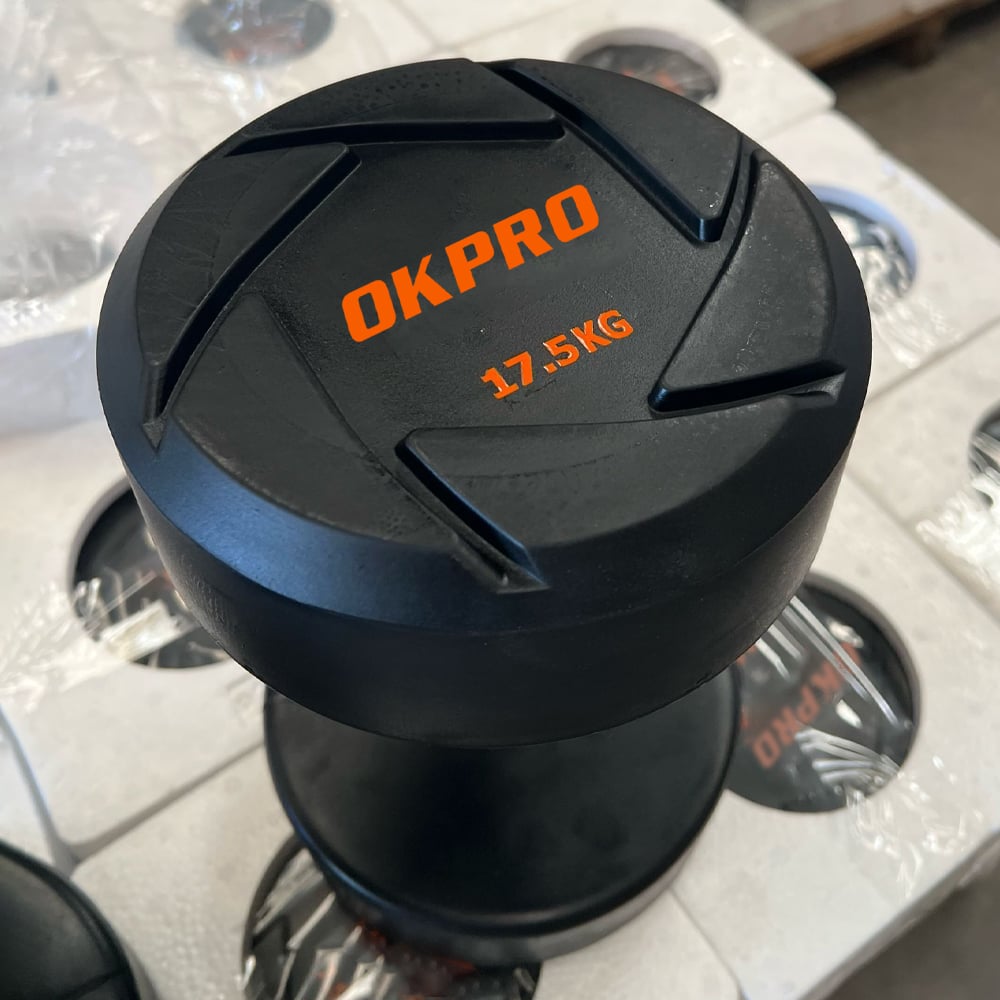
Brand Consistency vs. Member Experience – The Strategic Trade-Off
For large fitness chains, every piece of equipment communicates reliability and quality. Standardized dumbbells create a uniform visual identity across hundreds of locations—ensuring a member walking into a gym in Miami encounters the same color-coded, clearly labeled set they'd find in Seattle. This predictability builds subconscious trust; members associate familiar colors and grip styles with a consistent, professional experience.
| Brand Need | Standardized Approach | Member Experience Impact |
|---|---|---|
| Visual identity | Uniform color and labeling | Builds trust and recognition |
| Operational efficiency | Simplified training and maintenance | Consistent service quality |
| Serious lifters | May prefer specific knurling or grip | Potential trade-off to manage |
Yet a purely uniform approach can conflict with the needs of serious lifters, who may prefer specific knurling depths, handle diameters, or tactile feedback from particular urethane formulations. While standardization delivers operational simplicity and bulk cost savings, it risks alienating experienced members seeking nuanced training tools. The strategic trade-off lies in balancing the brand's need for instant recognition against the member's desire for a personalized, high-performance environment—a dynamic that directly influences retention, satisfaction, and organic advocacy.
Quality and Consistency – The Supply Chain Connection
Achieving consistency across hundreds of locations requires more than a purchasing decision—it demands a manufacturing and supply chain partner that understands material quality, coating integrity, and production repeatability. BXKM's expertise in auxiliary equipment for plastics processing—including compounding, mixing, and material handling—supports the production ecosystem for high-quality urethane coatings and rubber compounding used in premium dumbbells. By supplying reliable material processing solutions, BXKM helps ensure that the color, texture, and durability of every coated dumbbell remain consistent batch after batch. This comprehensive support, backed by a global supply chain, enables manufacturers to deliver the uniformity that multi-location gym chains depend on.
FAQ
| Question | Answer |
|---|---|
| Why are standardized dumbbells important for gym management? | They simplify staff training, maintenance, and inventory management—ensuring a consistent member experience and reducing operational costs. |
| What are the benefits of urethane-coated dumbbells? | Urethane coatings provide chip resistance, noise dampening, and durability—lowering replacement costs by up to 40% compared to basic rubber hex models. |
| How does bulk procurement save gym chains money? | Bulk ordering reduces per-unit costs by ~20% and shipping costs by ~58% when purchasing for multiple locations. |
| What results did Planet Fitness achieve with standardized dumbbells? | A 27% improvement in floor efficiency, 30% reduction in staff training time, and 40% fewer member complaints about equipment consistency. |
| What is the trade-off between standardization and member preferences? | Standardization delivers cost savings and brand consistency but may not satisfy serious lifters who prefer specific knurling or grip diameters. |
| How does BXKM support dumbbell manufacturing quality? | BXKM provides auxiliary equipment for plastics processing—compounding, mixing, and material handling—ensuring consistent coating quality for premium dumbbells. |