 EN

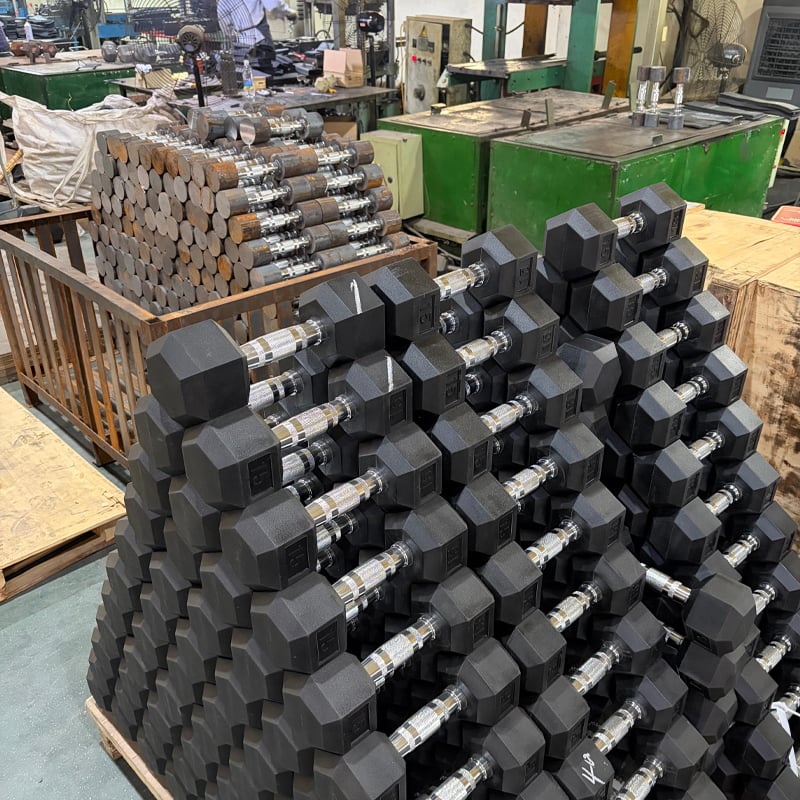
When a weights room runs hundreds of sessions weekly, failure is not remote. Hexagon rubber dumbbells take abuse few tools match, yet the handle-to-head joint is the usual failure point. Knowing why heads loosen after heavy drops is the first step toward durable gear.
A Real Drop-Zone Failure and the Lessons It Left
When Hexagon Rubber Dumbbells Started Rattling at a Franchise Gym
A Midwest franchise bought a budget line of hexagon rubber dumbbells from an unknown overseas vendor. Members reported rattles within four months. The manager found heads glued and pin-riveted, not welded; a drop test showed 15 degrees of rotation under torsional stress. Friction-welded replacements solved it.
Why a Loose Head Turns Into a Daily Hazard
Loose hexagon rubber dumbbells create liability the moment a head shifts mid-swing. A loose head drifts the center of mass, forcing unconscious athlete compensation and raising injury risk. A detached head becomes a projectile. Wobble also reads as poor maintenance and drives cancellations. Teams that skip joint inspection pay twice.
Hidden Structural Damage From Repeated Floor Impact
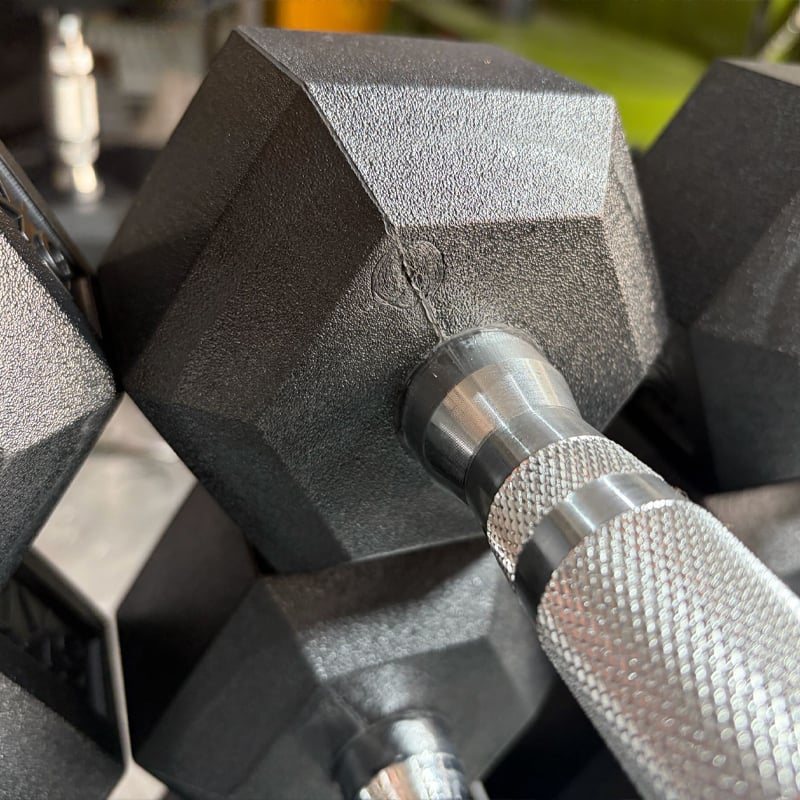
Failures start small. Each drop sends vibration fatigue through the handle-to-head interface. Adhesives and press-fit pins lose grip before visible movement appears. The hex shape keeps the unit flat but cannot shield the internal joint from shear. Micro-gaps let moisture reach the core, corroding a cast iron insert. A scheduled torque inspection catches problems early.
How Friction Welding Locks the Steel Head in Place
The Physics Behind a Friction-Welded Joint
Friction welding spins the steel head against the handle under pressure until friction heat softens the faces without flame melting. Stopping the spin forges them into one continuous grain structure that shares load across the whole interface. Torsional stress that would twist a pinned head spreads through the weld. For hexagon rubber dumbbells above moderate weight, this weld separates a five-year asset from a yearly replacement.
Why Hex Shape and Rubber Coating Matter in the Drop Zone
Flat faces stop roll-away and spread floor impact across a wider face. The rubber coating dampens noise and shields flooring while the steel head carries the mass. A knurled handle holds firm through chalk and sweat. Commercial hexagon rubber dumbbells depend on this layered energy management to survive daily abuse.
Meeting ASTM and ANSI Expectations for Commercial Use
ASTM F2216 covers free-weight plates; ANSI guides fitness-facility safety. No rule mandates friction welding, but ASTM drop-test procedures push joints to their limit. Buyers should request weld procedure and load-rating documents to confirm weld integrity for their floor.
A Practical Field Checklist for Buyers and Managers
What to Inspect Before You Purchase
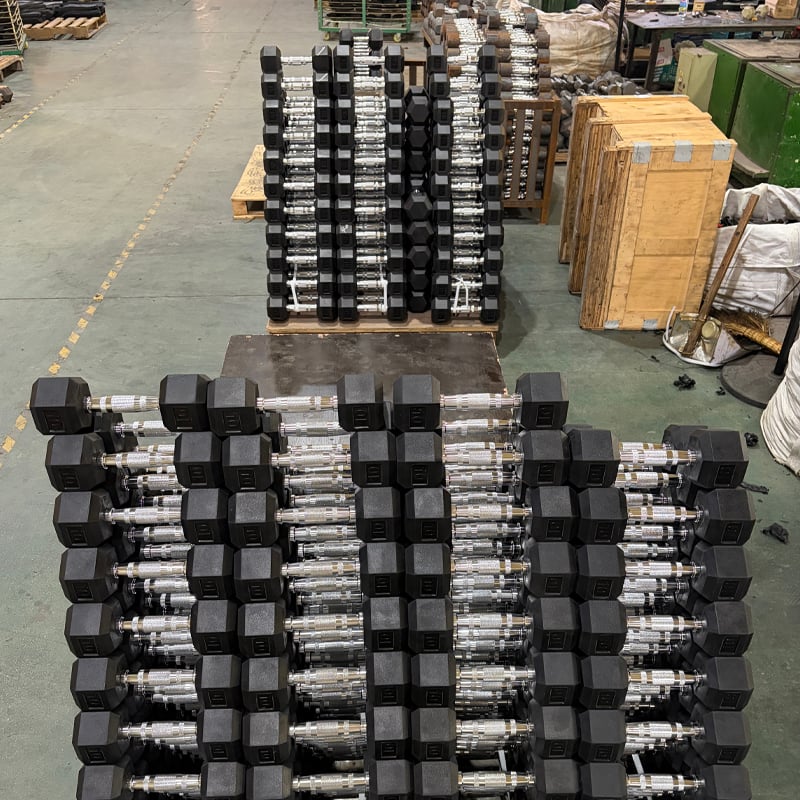
When specifying hexagon rubber dumbbells for a new floor, the joint tops the checklist. Request a sample pair and shake-test it: hold the handle, twist the head by hand. Any play means a weak joint. Confirm friction welding, not adhesive bonding, and check that the rubber coating fully covers the steel head. Verify weight on a calibrated scale.
Daily and Monthly Maintenance That Pays Off
Train staff to listen for rattle on floor walks. A weekly torque or shake check on a rotating sample catches early creep. Monthly, inspect the coating for deep cuts exposing the steel head, and retire any unit past tolerance. Store dumbbells flat and log inspections to reveal failing batches.
Choosing durable free weights is a long-game call for any commercial floor. The joint under the finish decides whether a unit survives year one or year five. Specifying welded construction, verified standards, and real inspection turns a recurring cost into a stable asset. For North American and European procurement teams, sourcing proven hexagon rubber dumbbells keeps a busy weights room safe and running for years.
Frequently Asked Questions
Question What actually causes dumbbell heads to loosen after heavy drops?
Answer Repeated floor impact sends vibration fatigue through the handle-to-head joint. Adhesives and press-fit pins lose grip over time, letting micro-gaps form. Moisture then reaches the core and accelerates corrosion. A metallurgical weld avoids this by forming one continuous structure, so there is no separate glue line or pin that can work loose under repeated torsional stress.
Question Why is friction welding better than glue or rivets for dumbbells?
Answer Friction welding creates a true metal-to-metal bond with a continuous grain structure, sharing load across the entire interface. Glue and rivets rely on a secondary material that degrades with heat, shock, and age. Under heavy commercial use, those secondary bonds fail first. A welded joint distributes torsional stress instead of concentrating it at a single pin or adhesive seam.
Question How can a gym manager test a dumbbell before buying a full rack?
Answer Order a sample pair and run a shake test: grip the handle and try to twist the head by hand. Any play means the joint is weak. Also confirm the weld procedure with the supplier, check that the rubber coating fully covers the steel head, and verify weight accuracy on a calibrated scale before committing to a large commercial order.
Question Which standards apply to commercial hexagon rubber dumbbells and free weights?
Answer Hexagon rubber dumbbells fall under general free-weight guidance such as ASTM F2216 for plates and related equipment, while ANSI informs safety expectations for fitness facilities. No single rule mandates friction welding, but ASTM drop-test procedures push joints hard. Buyers should request test records and material specs to confirm the joint quality their floor requires.
Question How often should commercial dumbbells be inspected for head loosening?
Answer Walk the floor daily and listen for rattles during use. Run a torque or shake check on a rotating sample every week, and perform a deeper inspection monthly for coating cuts or head play. Retire any unit past tolerance immediately. Consistent documentation helps managers spot a failing batch early and protect both members and budget.