 EN

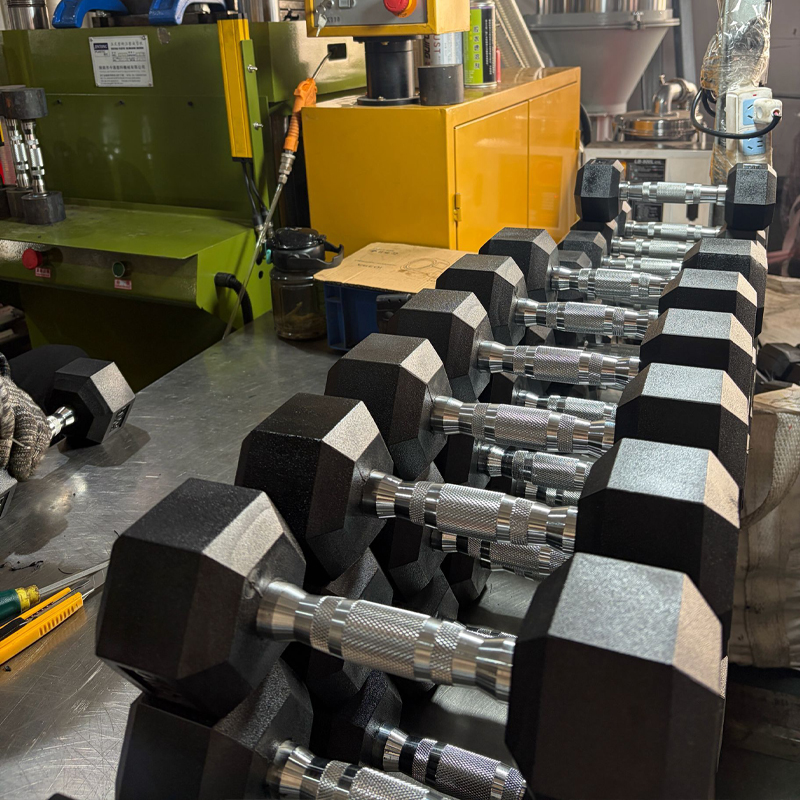
Commercial procurement managers in North America and Europe increasingly request private label hexagon rubber dumbbells to strengthen brand identity while controlling specifications. A tight customization program turns a commodity free weight into a recognizable gym-floor asset.
A Real-World Rollout: Private Label Dumbbells in a Regional Chain
Moving to hexagon rubber dumbbells across a regional chain
A regional operator running several clubs faced a problem: generic, unbranded weights offered no visual link to the facility. The team explored a private label program to make the strength area distinctly theirs.
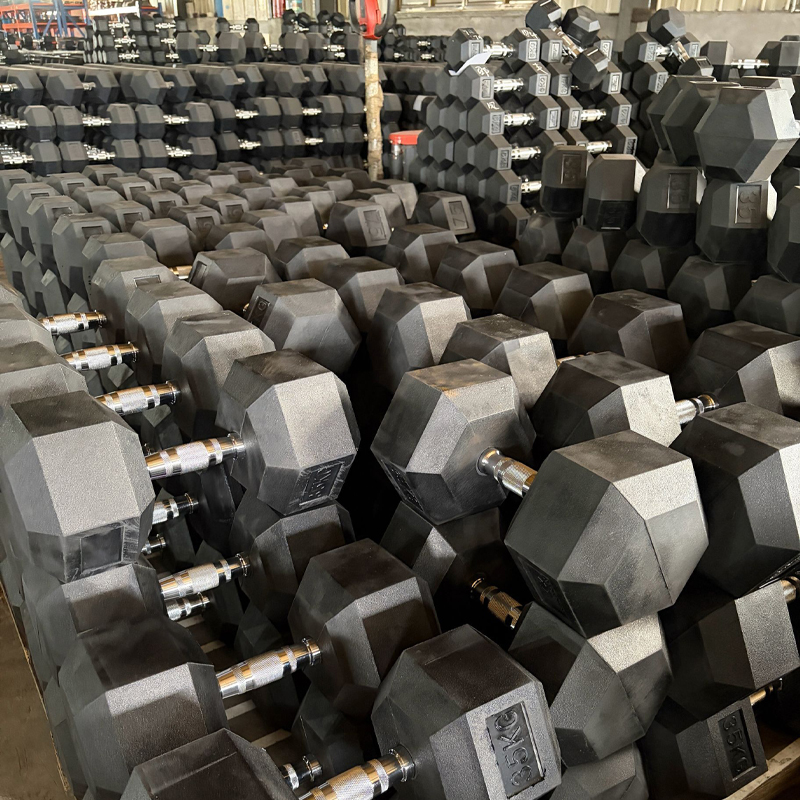
The path centered on hexagon rubber dumbbells finished with a 3D molded logo on each steel head. Rather than stickers that peel, the club chose branding fused during rubber molding, keeping marks legible. Color matching made the rack read as one cohesive set.
Resolving brand visibility and member complaints
Before customization, the operator logged complaints about loose handles and a chemical smell from imported sets. Virgin odorless rubber fixed odor directly; friction-welded steel heads removed the rattle loose assemblies produced. An ergonomic grip and consistent knurling built member confidence.
Outcomes after the rebrand
Within the first quarter, the operator saw fewer equipment complaints and steadier strength-zone engagement. Staff spent less time re-racking mismatched pairs.
Customization works when the specification serves daily operation, not just the catalog. A strong logo means little if the steel core loosens or the rubber cracks under load. That lens sets up the analysis below.
Risk Analysis and the Engineering That Controls It
Rubber odor, delamination, and floor damage risks
Three risks dominate buyer concerns. Odor from recycled compounds triggers member discomfort; virgin odorless rubber removes the source. Delamination separates coating from the steel core under impact, but friction welding and controlled rubber molding keep the bond intact. Round weights roll and hazard floors — the hexagon shape stops rolling and protects subfloor tile.
These failures surface after thousands of drops, which is why inbound inspection matters.
Handle ergonomics and grip safety
Handle geometry carries risk. Too thin strains the forearm; too thick limits control. Chrome handle plating resists corrosion only at spec thickness. Knurling must balance grip security against skin irritation; an ergonomic grip contour aids neutral alignment.
Specify handle diameter, knurl pattern, and plating explicitly to avoid batch drift between runs.
Supply chain and compliance exposure
Private label adds supply-chain risk. Color matching can drift without a controlled process; poor packaging causes transit damage; documentation gaps create customs exposure. Distributors importing hexagon rubber dumbbells must track material certifications per lot.
Start with supplier qualification: request a documented quality system and material certifications before committing to production.
Spec, Inspect, and Maintain: A Procurement Checklist
Material and structural specifications to request
Start with the steel core: friction-welded heads beat glued assemblies and reduce loosening. Specify virgin odorless rubber, and request a 3D molded logo rather than adhesive badges with confirmed color matching tolerance.
Define chrome handle plating, knurling pattern, and an ergonomic grip profile. Include MOQ, lead time, and packaging. Buyers evaluating hexagon rubber dumbbells should anchor specs to ISO 9001 for quality systems and ASTM methods for rubber hardness.
Inbound inspection and maintenance routines
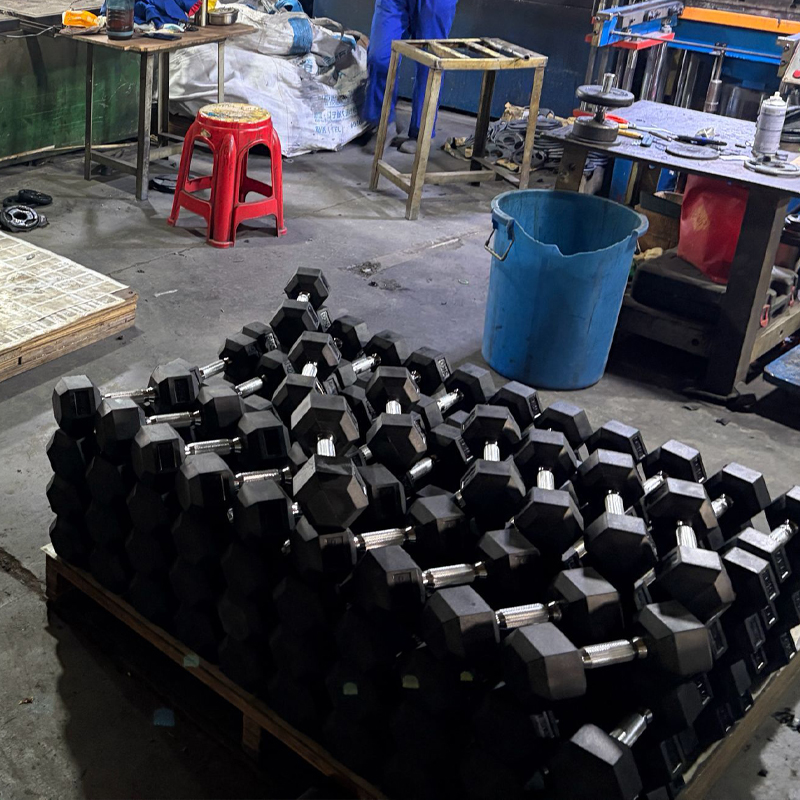
On arrival, inspect a sample, not the carton. Check logo alignment, rubber uniformity, handle straightness; tap heads for voids; verify weight tolerance. Photograph defects. OSHA walking-surface guidance shows why the hexagon shape matters: stationary weights cut trip risks.
Wipe handles after peaks, avoid harsh chemicals, rotate racks, and confirm knurling and rubber stay sound. These habits protect the brand identity invested in the product.
For an OEM partnership, the path is clear: set the spec, qualify the supplier to ISO 9001, inspect on arrival, and maintain on schedule. Hexagon rubber dumbbells reward that discipline with a branded, durable free-weight zone members trust, returning value through fewer replacements and stronger floor presence.
Frequently Asked Questions
Question What is the minimum order quantity for private label hexagon rubber dumbbells? Answer Minimum order quantity depends on weight range and branding complexity, but suppliers typically set a per-size MOQ rather than a total-set minimum. A focused range of popular sizes lowers the entry barrier for distributors testing a new brand. Buyers should confirm whether color matching and 3D molded logo tooling carry separate setup fees before signing.
Question How does a 3D molded logo differ from a printed or adhesive badge? Answer A 3D molded logo is formed directly in the rubber or steel head during production, so it cannot peel or fade like adhesive badges. Printed vinyl degrades after repeated drops and cleaning. For hexagon rubber dumbbells, molded branding stays legible through years of commercial use, protecting the brand identity private label programs are built to create.
Question Why does virgin odorless rubber matter for commercial clubs? Answer Virgin odorless rubber avoids the chemical smell linked to recycled compounds, which can trigger member complaints in enclosed training rooms. It also sheds fewer particulates onto flooring. Combined with friction-welded steel heads, the material supports a cleaner, quieter free-weight area that aligns with the standards commercial operators expect from their equipment suppliers.
Question Which handle specifications should buyers define before production? Answer Buyers should lock handle diameter, knurling pattern, chrome plating thickness, and ergonomic grip contour before production begins. These details drive both comfort and safety during high-volume sessions. Specifying them in writing prevents batch-to-batch variation. Pair the handle spec with a documented quality system so the supplier can reproduce the same feel across reorder cycles without surprise changes.
Question How should facilities inspect incoming dumbbell shipments? Answer Inspect a statistical sample on arrival instead of assuming carton integrity. Verify logo alignment, rubber uniformity, handle straightness, and weight tolerance, then tap heads to detect internal voids. Photograph any defect and attach it to the supplier record. A short inbound checklist catches common issues before dumbbells reach the floor and protects the investment behind a private label program.