 EN
EN

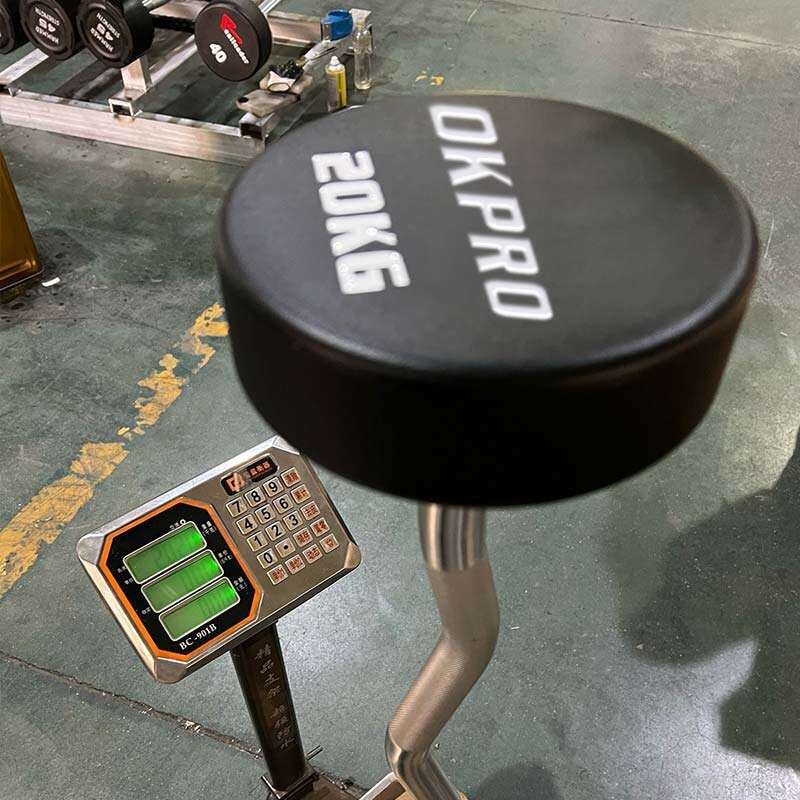
Steel Grade and Tensile Strength Substructure of Commercial Grade Barbells
Why 190k+ PSI is a Requirement for Heavy Use Facilities
The commercial gym barbells have to endure a constant and heavy load which makes the barbells tensile strength (PSI) a safety and performance concern. Because of the nature of the business, Barbells with tensile strength of more than 190,000 PSI are able to resist bend and fail permanently due to the repetitive stresses. That is why businesses have hundreds of daily users for a fitness barbells and commercial gym. Fitness industry injury rports 2023, say, that barbells that are below this threshold, have a 30% higher failure rate than normal barbells in a high traffic environment. This is the strength level performance you want your customers to experience on their maximum lifts.
5 Year Wear Data from Tier 1 Commercial Facilities
Data from 5 commercial chains reveal for the studies conducted, that more than 190k PSI barbells are able to withstand time, with great spiral integrity, on their implants. Systems that report, have less than 5% deformation or fail after 10 thousand lifts. Compared with other models that have weaker standards and rely on replacement within two. Aggervate report 2023 logs of facilities covers the replacement of their barbells, and show that, from their logs, replacement costs are decreased in their facilities 40% The log displays a great level of durability which justifies the attention to safety for each commercial bar use.
Knurling Design for Performance, Safety, and Inclusivity Across Users
IPF/IWF Alignment vs. Functional Grip Zones: Optimizing Knurling for Lift Type and Hand Size
Competiton standard barbells have Knurling patterns that align with IPF/IWF standards. This, however, can be less useful for commercial settings. For example, powerlifting bars have a more aggressive center knurling which is more beneficial for back squats, and reduces slippage by 63%. For Olympic bars, more moderated shoulder knurling is preferred for clean catches. Different hand sizes can be a significant factor for depth: shallower patterns (sub 0.5mm) can be used to avoid skin tears for smaller hands during high-rep WODs, while those that are deeper (1.2mm) can better secure larger grips during heavy deadlifts.
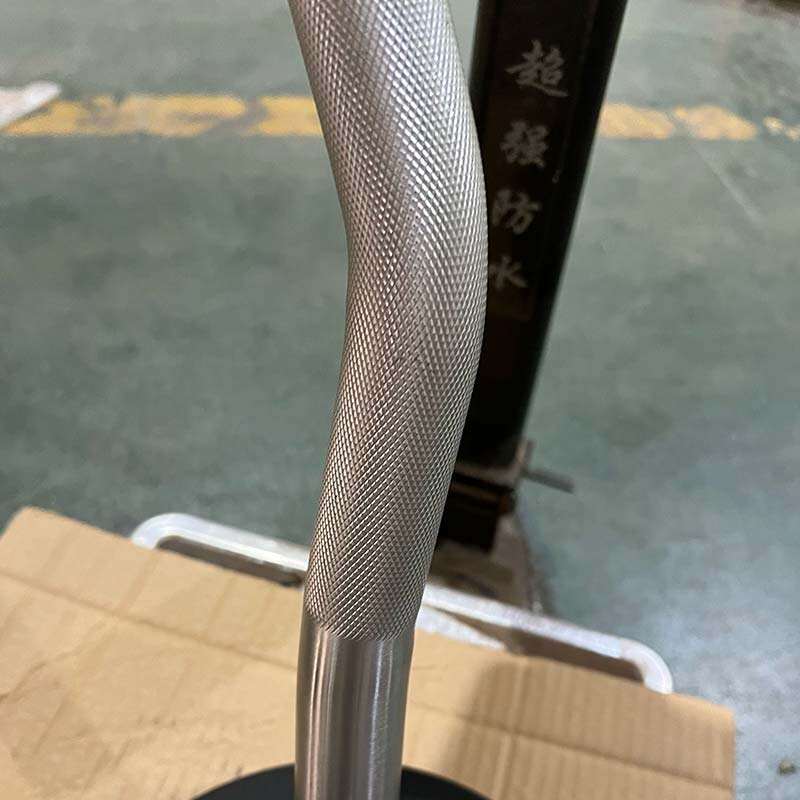
Gender Inclusive Grip Testing and Dual-Density Knurling (IHRSA 2023 Survey)
According to the 2023 IHRSA Survey, 71% of surveyed female lifters reported experiencing grip failure due to standard knurling during snatches. Dice with dual density specifically try to address this issue by implementing more aggressive knurling, with 30% of such more shallow knurling in hook grip zones, and palm contact zones that are designed to reduce contact pressure by 42% for smaller hand spans. Facilities that adopted this design reported a 57% decrease in the number of dropped barbells and a 29% increase in user retention. This level of ergonomics design allows for and encourages better, more effective and safer training of a more diverse user demographic without compromising the design and integrity of the bar itself.
Sleeve Rotation Systems: Balancing Smoothness, Durability, and Maintenance in Commercial Barbells.
Bearings vs. Bushings at Scale: Rotational Consistency and Failure Rates Beyond 10,000 Cycles. Examples of commercial rotary systems have shown great performance in extreme operational conditions.
Sporting equipment testing technologies have allowed this industry to become acquainted with extreme operational conditions in sporting equipment. Commercial gym barbells, for example, experience thousands of lifts weekly. This aspect allows these devices to test the limits of performance in systems of sleeve rotation.
Studies have shown many important aspects of bearing vs. bushing designs at 10,000+ lift cycles. Bearing systems retain 95% rotational smoothness for a 3% failure rate in the most visited places. Their multi-point contact design gives a mechanism to evenly distribute load.
Bushing sleeve designs show an 15-20% cooling rate at a 7,500 cycle design. This design has been proven to have a correlation with greater wobble stability and dynamic movement performance.
In test after test it has been shown that 40% less maintenance is required in the bushing design within 5 years at an increased initial investment for the design. This is a result of the bushing design lacking the bronze to prevent deformation within repeated cycles of impact while the bearing systems have hardened steel races that resist the design of the bushing systems. For it is commercial design that is goals for minimal replacement and down time at a given metric of systems load for 10,000 cycles the bearing systems are a given.
Corrosion Resistance and Coating Longevity for Low-Maintenance Institutional Use.
Stainless Steel, Hard Chrome, and Cerakote Compared: 3-Year Real-World Sweat and Salt-Spray Performance. Commercial gym barbells are under heavy corrosion protective equipment. This is because of the unlimited usage of sweat and disinfectant.
Hard chrome has shown extreme surface hardness. This of application has been shown to be less-resistant in humid environments as it requires less conditioning to the application. Cerakote has shown less conditioning in these environments due to its ability to degrade in less time than its competitor.
Here’s what the performance data says:
Stainless steel: After 3 years, there has been almost no corrosion, including with neglect.
Hard Chrome: There is visible pitting in just 18 months, requiring weekly maintenance.
Cerakote: When applied properly, there is more than 95% coating retention, resisting corrosion from sweat.
Stainless steel or Cerakote finishes are preferable in low maintenance operational facilities. Hard chrome, however, is more expensive due to necessary long-term upkeep.
FAQ
What is the point of having a tensile strength of 190,000+ psi in a barbell?
This essentially guarantees that the barbell will not permanently bend or fail with repeated use, especially in a busy gym environment, which is a safety and functional concern.
How does the knurling design influence a barbell’s performance?
The design of the knurling affects not only safety but the grip as well. With optimal zonal grippage design, which varies with the type of lift and hand size, the likelihood of slippage and tearing off skin is minimized.
What are the advantages of bearings in barbells as opposed to bushings?
Especially in high use facilities, the durability of bearings is greatly improved compared to bushings and they require less maintenance.
How do different barbells handle rust and corrosion?
Stainless steel and Cerakote are much better than hard chrome since the latter is much more likely to develop micro cracking in a humid environment.